
 Tiếng Việt


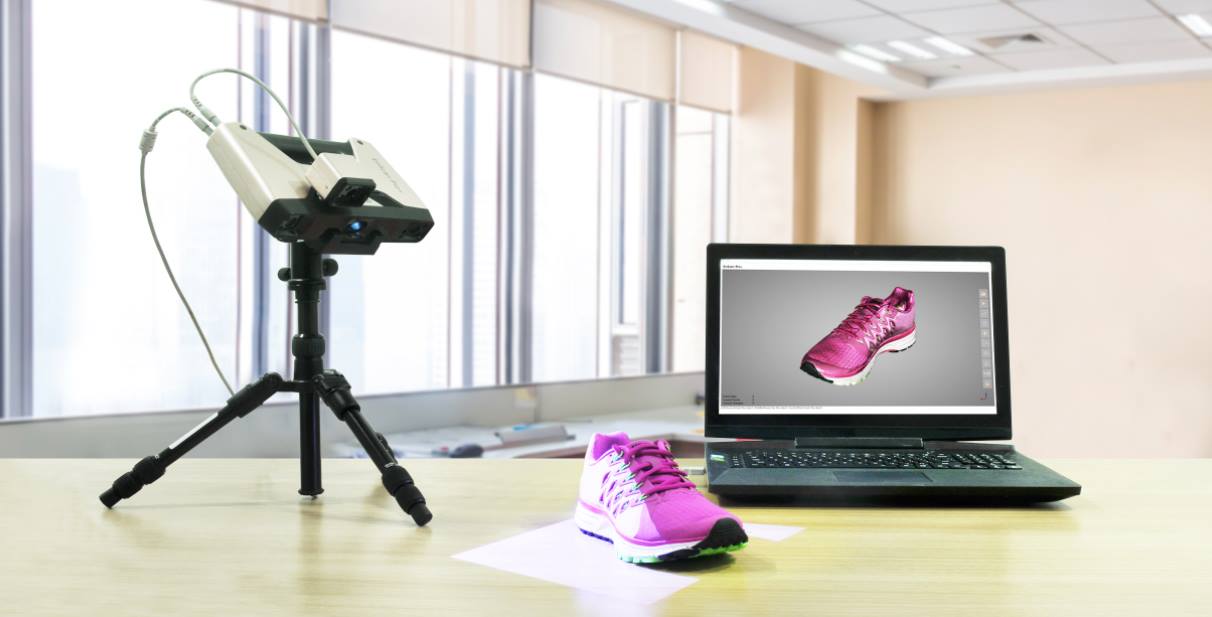
The EinScan Pro Plus is one of the most widely used low-cost 3D scanners on the market today. It is versatile, so it works in many fields, and the field that uses 3D scanners the most right now is sculpture.
EinScan 3D scanners:
Shining 3D uses German technology, with its factory in China. Shining 3D makes many 3D scanner lines. In the EinScan series, Shining 3D offers the following models:- EinScan S.
- EinScan SE.
- EinScan SP.
- EinScan Pro.
- EinScan Pro Plus.
EinScan Pro Plus 3D scanner:
- Accuracy: 0.05 mm.
- Capture area: 310 x 170 mm for faster scanning.
- Scan modes: handheld (white light and HD scan), tripod, automatic (tripod + turntable); full-color scanning.
- HD scan mode with 100 powerful laser lines.
- Upgraded R2 software: fast, with thorough point capture.
Hands-on test:
Statue scan 1 | 3D scanner
3D scan mode: tripod, white-light technology. Accuracy: 0.05 mm Resolution: 1.3 MP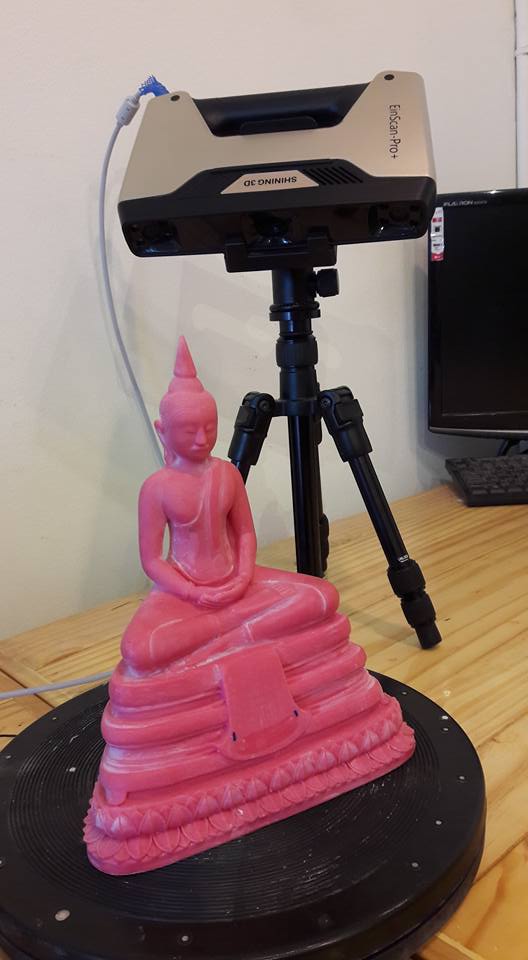
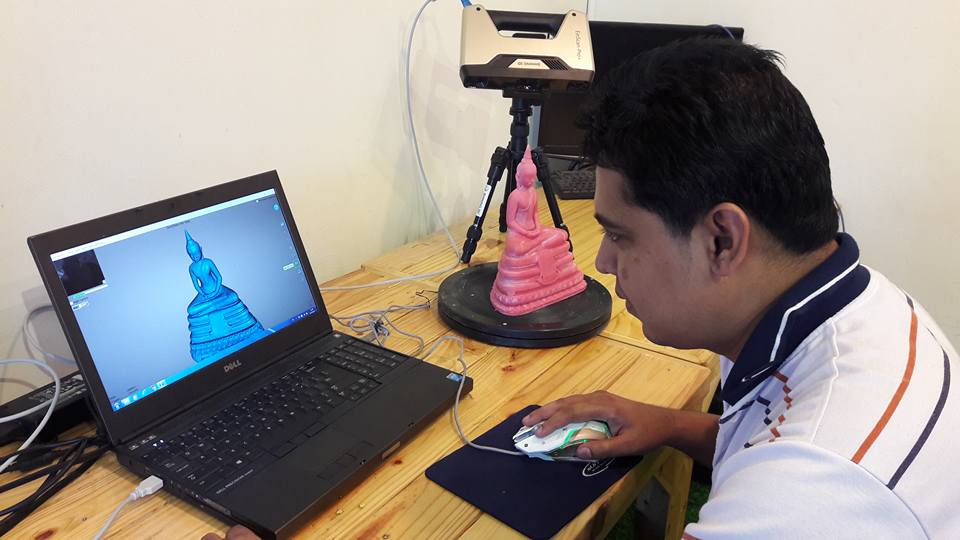
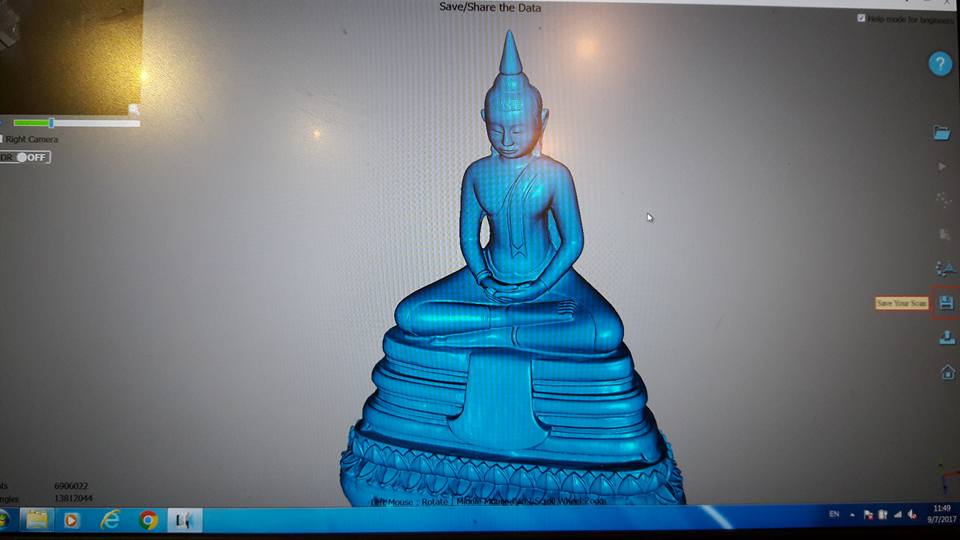
Statue scan 2 | Low-cost 3D scanner
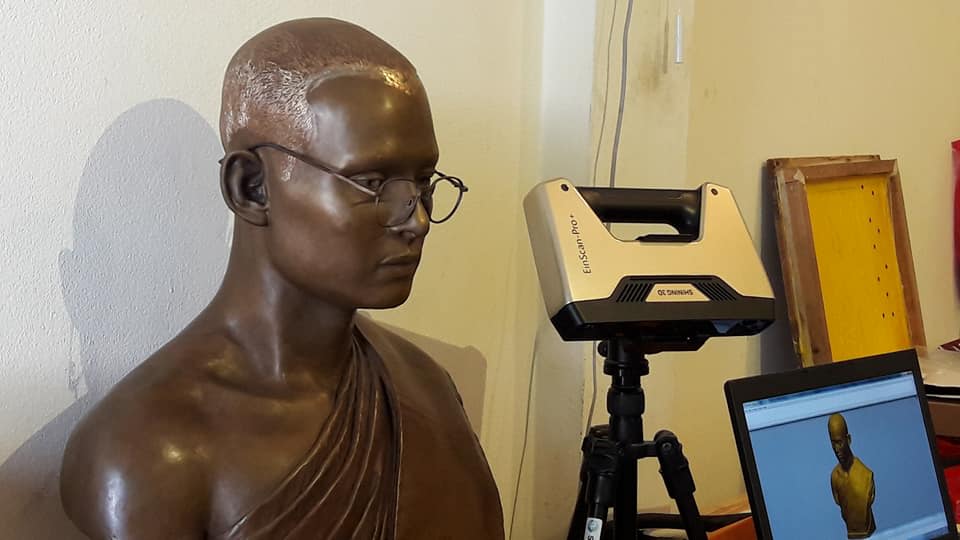
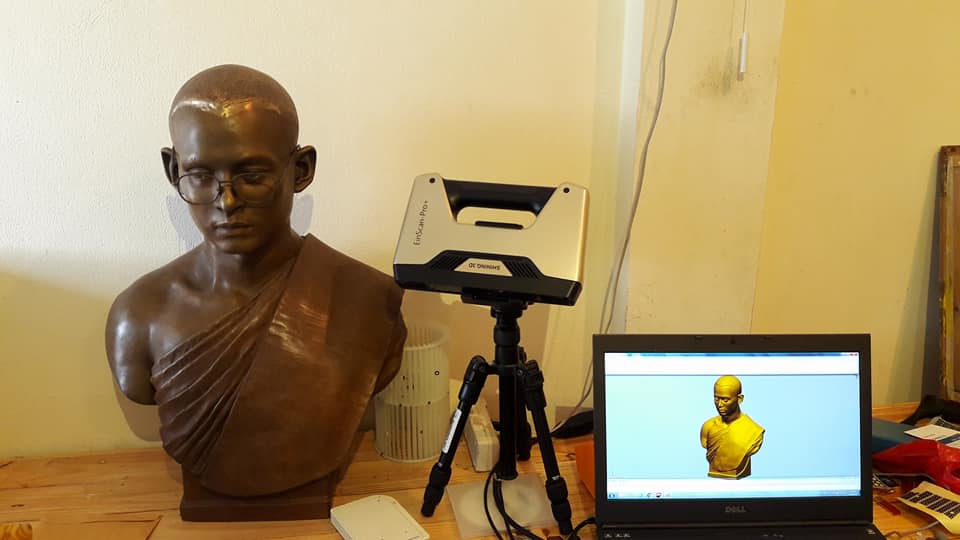
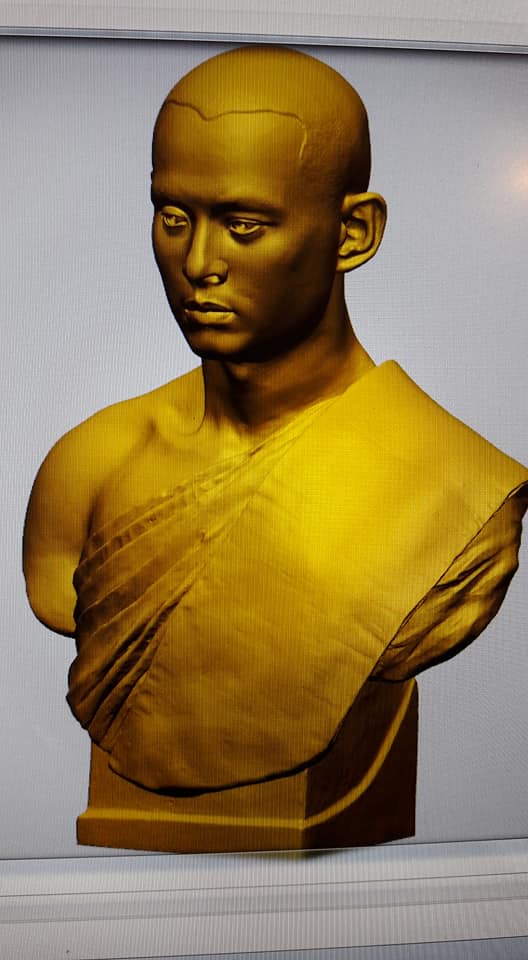
Full-color 3D scanning
Nguyen Van Cuong
Zalo/ Viber/ Skype: 0975 008 728
EinScan Pro Plus: Hard to Resist If You Have 200 Million VND
Contact CT3D Group
CT3D Group – professional 3D printing, 3D scanning, design and rapid prototyping services nationwide.
- CT3D Thu Duc – Ho Chi Minh City, Hanoi, Hai Phong: in3d.edu.vn – Hotline 0975 008 728 (Mr. Thai)
- CT3D District 6 – Ho Chi Minh City: 3dmaker.vn – Hotline 038 7798308 (Mr. Phuc)
Scanning statues with a 3D scanner: workflow and tips
Sculpture is one of the biggest uses for 3D scanners. Statues have free-form, highly detailed surfaces that are almost impossible to reproduce accurately by hand measurement. An efficient statue scanning session usually goes like this:
- Prepare the piece: wipe off dust. If the statue is glossy, metal-plated or very dark, apply a thin coat of anti-glare scanning spray.
- Pick the scan mode: put small statues on the turntable for automatic scanning. For large statues, use handheld mode and add markers if the surface has few features.
- Cover every angle: scan from above, from below and into deep recesses such as armpits, clothing folds and under the chin to keep holes to a minimum.
- Align and process: align the scans, remove noise, fill holes and create a watertight mesh.
- Export: STL or OBJ (with texture for color scans) for 3D printing, CNC or digital archiving.
What is statue scan data used for?
Once you have the digital model, you can scale the statue up or down to any size while keeping its original proportions. This is how workshops making monuments, religious statues and decorative statues usually work: scan a small model sculpted by an artisan, scale it up, then CNC-cut it from foam or 3D print it in sections, make a mold and cast it in composite. Color scan data is also used to digitize museum artifacts, for online exhibitions and for printing souvenir models.
| Purpose | Next step after scanning |
|---|---|
| Enlarging a statue | Split into sections, CNC-cut foam or 3D print, finish by hand, make a mold |
| Making copies in volume | Print the master, make a silicone mold, cast in composite or polyresin |
| Restoration | Digitally sculpt the damaged parts, print replacement pieces |
| Archiving and digital display | Keep the color data, optimize the file for web viewing |
For large statue projects, see composite statue production for advice on the full process, from scanning the model and scaling it up to finishing.
Frequently asked questions
Can 3D scanning damage a statue?
No. Structured-light and laser scanners only shine light on the surface and never touch it. Just be careful when applying markers or anti-glare spray to antique statues, and test on a hidden area first.
Can a statue with many deep recesses be fully scanned?
Very deep, narrow recesses are often hard to capture completely because the light and the camera cannot both reach them. The fix is to scan from more tilted angles, then fill or digitally sculpt the missing parts.
Can a statue be enlarged from scan data?
Yes. The model is scaled to the size you want, split into sections and CNC-cut from foam or 3D printed, then the surface is finished and a mold is made for composite casting or bronze casting.
Is color scanning needed for statue work?
Not if you only need the shape for production. Color scanning is useful for archiving artifacts, digital display, or as a reference when painting copies.
Related services at CT3D Group
- 3D scanning service – high-accuracy 3D scanning
- Custom 3D printing service
- Custom 3D design service
- CT3D Group network: ct3dgroup.com · in3d.edu.vn – Hotline/Zalo 0975 008 728

