
 Tiếng Việt


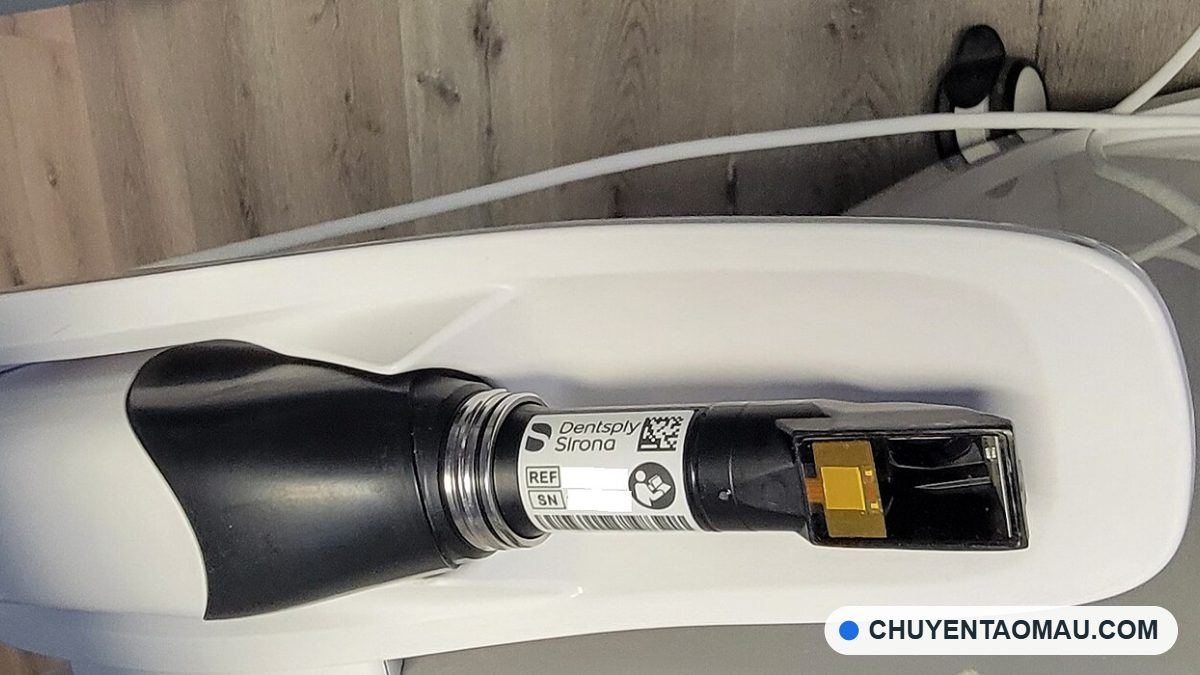
A dentist once sent us a jaw scan and asked us to print a model. The file came out of an intraoral scanner, got zipped, sent over a messaging app, then we downloaded it, opened it in a second program to fix the mesh, and exported it to a third program to lay out the print. Every format change is another chance to get the units wrong, lose color or shift the coordinate system. That is still common in many clinics today.
That is why two news items from the past few weeks caught my attention. They show 3D scanning in healthcare moving from a “standalone device” to “the first link in an automated chain.”

An intraoral scanner wired straight into chairside printing
According to 3D Printing Industry (October 20, 2026), at 3DNext 2026 in Miami Beach, SprintRay, a dental 3D printer maker, introduced its first intraoral scanner, called Foundation. It is a wireless scanner that captures color data and runs on a new scanning software layer called ScanOS, built into the company’s cloud dashboard. Scans go straight to the cloud. Clinics no longer have to export files from a third-party scanner and upload them again.
Alongside it comes the Nano Series, three small machines: the NanoPrint printer with a 385 nm light source, the NanoWash automatic wash-and-dry unit, and the NanoCure curing unit. All three fit on a countertop under 30 inches (about 76 cm). Two software features, AutoPrint and Job Handoff, pass case data from one machine to the next. The scanner and Nano Series start shipping in November 2026, first in the US.
The reason for the small machines is worth noting: SprintRay says more than 80% of chairside print jobs are “one patient, one case.” Clinics don’t need a big printer running many cases at once. They need a smooth path from scan to finished part. The article also cites AM Research data: about 15% of US dental practices already own a 3D printer, and the average price of a dental printer has dropped from about $65,000 in 2015 to just over $10,000.
CEO Amir Mansouri said something I think fits reality well: “Openness matters, but so does validation.” An open system is good, but it has to be proven. A closed ecosystem cuts data conversion errors. The trade-off is that users depend more on one vendor. Vietnamese clinics should weigh both sides before investing.

Face scanning to design CPAP masks automatically
On the personalized medical device side, 3D Printing Industry (September 28, 2026) reported that XYZO (Newcastle, UK) launched an automated hybrid manufacturing platform. It combines polymer printing with precision CNC milling, cleaning, curing and inspection in a single machine frame. One project is DREAM, a six-month feasibility study with Lunaris Medical, backed by Innovate UK’s Made Smarter Innovation program. It targets personalized CPAP masks for people with sleep apnea, with this chain: face scan, automated CAD design, then multi-material printing.
A CPAP mask is a textbook fit problem. If it doesn’t seal, air leaks. If it presses too hard, it causes skin sores. And patients wear it all night, for years. XYZO CEO Kegan McColgan-Bannon made a point that anyone running a print service like me can relate to: manufacturers don’t need parts that are just “printed,” they need finished parts that are accurate, repeatable and profitable. The project is still at the feasibility stage, but the direction is clear: 3D scanning is the input, and automated design software is the core.

Lessons on 3D scanning for medical use
From the body scanning and medical model projects we have done, here are a few technical points to keep in mind when bringing 3D scanning into a clinic or a medical device shop:
- Accuracy must come with repeatability. If you scan the same jaw twice and get two models that don’t match, you can’t use them for aligners or crowns. Scan a reference sample regularly to check the scanner.
- The human body doesn’t stay still. Facial skin deforms when people smile or open their mouth. When scanning a face for a mask or splint, agree on posture and expression and scan quickly to cut motion errors.
- Mesh repair is the “hidden” step that decides the result. Holes, noise and reflective areas all need fixing before design. Automated software speeds this up, but an operator still has to check by eye.
- Print materials need the right certification. A reference model is very different from an appliance worn in the mouth or in long contact with skin. Only use resins certified as biocompatible for parts fitted to patients.
- Protect patient data. Uploading scans to the cloud is convenient, but clinics need to know where the data lives and who can access it.


Opportunities for Vietnamese clinics and service shops
In Vietnam, intraoral scanners are fairly common in large dental clinics in Hanoi and Ho Chi Minh City. But linking the scanner to an in-house printer is still rare. Most clinics still send data to a dental lab. A compact “one patient, one case” setup could suit mid-sized clinics that need to make whitening trays, night guards or consultation models on the same day.
Beyond dentistry, face and body scanning opens up many uses: orthopedic braces, cushions for people with disabilities, protective masks and custom eyeglass frames. The prerequisite is still clean, dimensionally correct scan data. That is why I always advise customers to invest in their scanning and data processing workflow first, and think about the printer after.


About CT3D Group and In3D.edu.vn
CT3D Group supplies 3D scanners, high-precision resin 3D printers, and body scanning, data processing and model printing services for clinics, dental labs and medical device companies. See CT3D Group’s 3D scanning and medical 3D printing solutions to pick the right setup for your clinic’s size. The company profile is available at CT 3D Company.
Dentists and lab technicians who want to master scanning, mesh repair and design for 3D printing can take the applied 3D scanning and 3D printing courses at In3D.edu.vn.
Sources: 3D Printing Industry (October 20, 2026; September 28, 2026).
Compiled by Nguyen Cuong

