
 Tiếng Việt


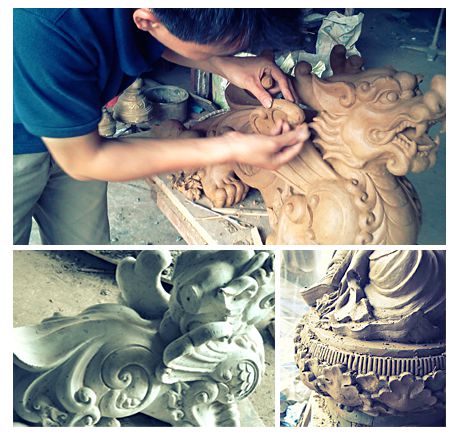
[Low-cost 3D scanners] [news] What matters most when using a 3D scanner for wood carvings, bronze pieces, sculptures and composite statues? Plenty of people use these scanners, yet this is a very important point that many still overlook.
Requirements.
Unlike reverse engineering, 3D scanners used for fine art and sculpture don’t need very high accuracy. What they do need is high resolution, so that every line of the piece shows up fully in the scan. Low-cost 3D scanners can do the job ( low-cost 3D scanners ) Some pieces are 3D scanned to support CNC wood carving, saving up to 80% of the pattern drawing work, with sharp detail that meets the job’s requirements.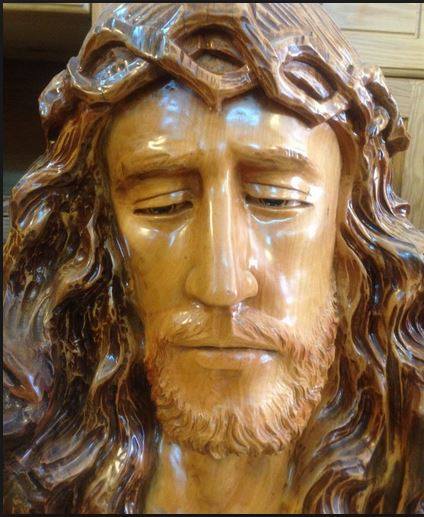
2.5D wood model | Catholic statue
BECONI.VN
- Facebook: https://www.facebook.com/beconi.vn
- Website: http://beconi.vn/
- Catholic statue workshop
- Catholic Statues | Catholic Statues and Icons
- Premium Catholic Statues
2.5D data | Catholic model.

2.5D royal panel
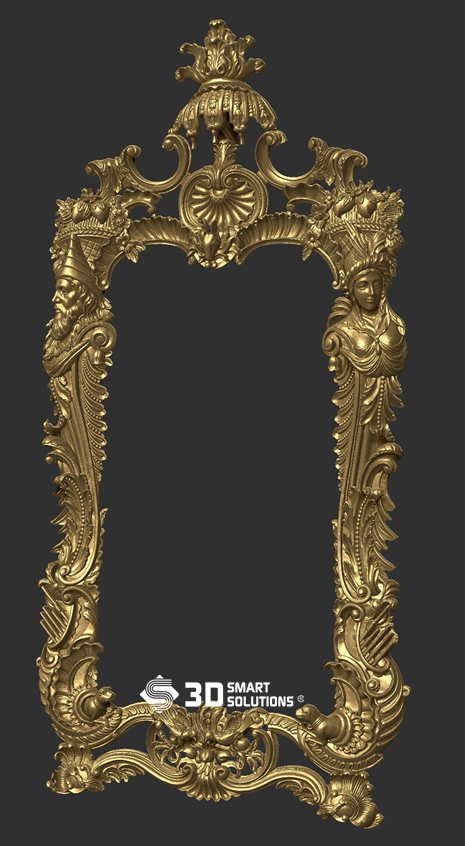
Royal mirror frame model, 2.5D data
Scanning a bronze crane with ultra-sharp lines
Can a low-cost 3D scanner do the job?
Some mid-priced 3D scanners ( < 200 million VND) can handle this work and fully meet the requirements of sculptures like the ones above.Advice: 0975 008 728 (Nguyen Van Cuong)
Contact CT3D Group
CT3D Group – professional 3D printing, 3D scanning, design and rapid prototyping services nationwide.
- CT3D Thu Duc – Ho Chi Minh City, Hanoi, Hai Phong: in3d.edu.vn – Hotline 0975 008 728 (Mr. Thai)
- CT3D District 6 – Ho Chi Minh City: 3dmaker.vn – Hotline 038 7798308 (Mr. Phuc)
Resolution matters more than accuracy when scanning artwork
With carved wood, bronze and composite statues, the main goal is to fully reproduce the artistic lines: folds of clothing, facial features, leaf patterns, carving texture. People judge these pieces by eye, so a deviation of a few tenths of a millimeter overall usually doesn’t matter, but a blurred or missing carved line is easy to spot. That’s why, when scanning artwork, resolution (point density) and the ability to capture deep detail are what count, while the absolute accuracy needed in mechanical work is secondary.
Factors that affect scan data quality
- Point spacing: the smaller it is, the clearer the carved lines, but the heavier the file.
- Scan angles: deep grooves and narrow gaps need scanning from several angles so the bottoms aren’t missing.
- Surface of the piece: shiny bronze, lacquer and polished wood reflect light easily, so apply a matte spray.
- Data processing: heavy smoothing wipes out detail, so keep detail in the patterned areas.
- Operator skill: knowing which areas need careful scanning and which only need the overall shape.
Using scan data in handicraft production
Scan data can be used in several ways. For wood, the file goes to CNC to rough out the blank, then a carver finishes it by hand, cutting out most of the roughing work. For bronze and cast metal, the model is 3D printed or CNC-cut in foam as a pattern for the mold, and it can be scaled up or down as needed. For composite and polyresin statues, the model is used to make silicone molds for mass reproduction.
One benefit people rarely mention is archiving. Valuable hand-carved pieces and antique models can deteriorate over time, but digital data lasts and can be reproduced at any time.
If you need to scan a piece and move into producing statues or gifts, take a look at CT3D’s composite statue production service based on 3D data. Call or Zalo 0975 008 728 for advice.
Frequently asked questions
What is 2.5D data in the fine woodwork industry?
2.5D data is a raised surface on a flat background, like a relief, a wood panel or a door pattern. A 3-axis CNC machine only needs to cut from one side, so scanning and processing this kind of data is usually faster than for a full 3D statue.
Can a low-cost scanner capture carved pieces?
Many mainstream scanners can handle carvings with medium-sized detail. For very fine patterns or deep grooves, a higher-resolution scanner gives sharper results and needs less manual data repair.
Does scanning shiny bronze need any preparation?
Usually you’ll need a thin coat of scanning spray, because shiny bronze reflects light strongly and the scanner misses data. Purpose-made spray wipes off after scanning without harming the surface.
If I use scan data for CNC wood carving, do I still need a carver to finish it?
Usually, yes. CNC produces a near-finished blank and saves most of the roughing time, but the sharp lines, spots the tool can’t reach and the soul of the piece usually come from a carver finishing it by hand.
Related services at CT3D Group
- 3D scanning service – high-accuracy 3D scanning
- CNC wood and relief cutting
- Custom 3D printing service
- CT3D Group network: ct3dgroup.com · in3d.edu.vn – Hotline/Zalo 0975 008 728

