
 Tiếng Việt


3D scanners are becoming more common on the market. They help with drawing wood patterns and wood carving, reverse engineering, R & D, mold inspection, inspecting CNC-machined parts and more.
3D scanners under $20,000.
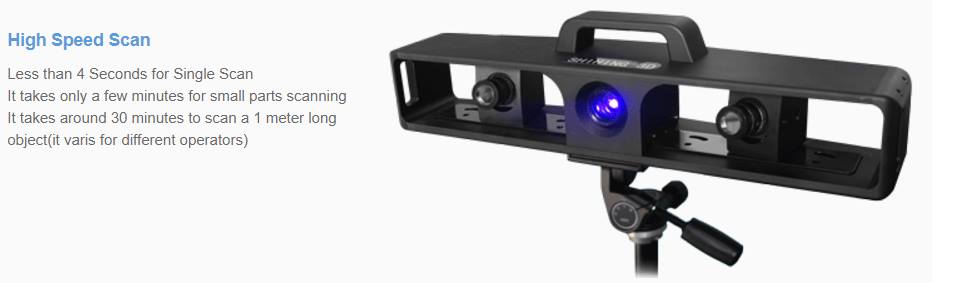
There are quite a few 3D scanners under $20,000. Different jobs call for different machines, so I usually recommend different models to different customers. Today I want to introduce a 3D scanner for mechanical work, wood crafts and statue sculpting. The EaScan D is built to German technology standards and made in a factory in China. That keeps its price much lower than other scanners with similar specs.
Strength: high-speed scanning.
Each single shot takes less than 4 seconds. Small parts can be done in 3 minutes, and large parts up to about 1 meter take around 30 minutes. With the modern, mobile tripod system that comes with it, scanning can be even faster.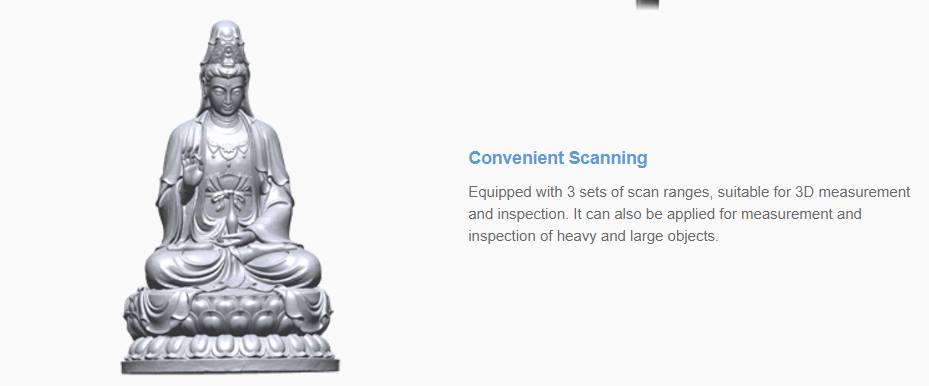
The scanner comes with 3 lens sets.
It is the only 3D scanner under $20,000 with 3 lens sets (one lens set placed in 3 different positions to suit different products). This makes the EaScan D 3D scanner more capable than any other 3D scanner in its class.Uses blue light.
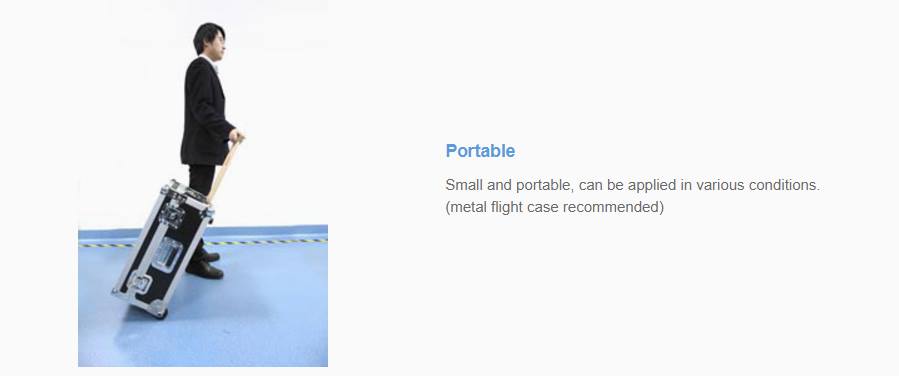
Professional packaging.
Specifications.
 3 scan ranges | 3 accuracy levels.
- 100 x 75 mm
- 200 x 150 mm ———- 3 accuracy levels from 0.015 to 0.05 mm
- 400 x 300 mm ——————– (per single shot)
Use in reverse engineering.
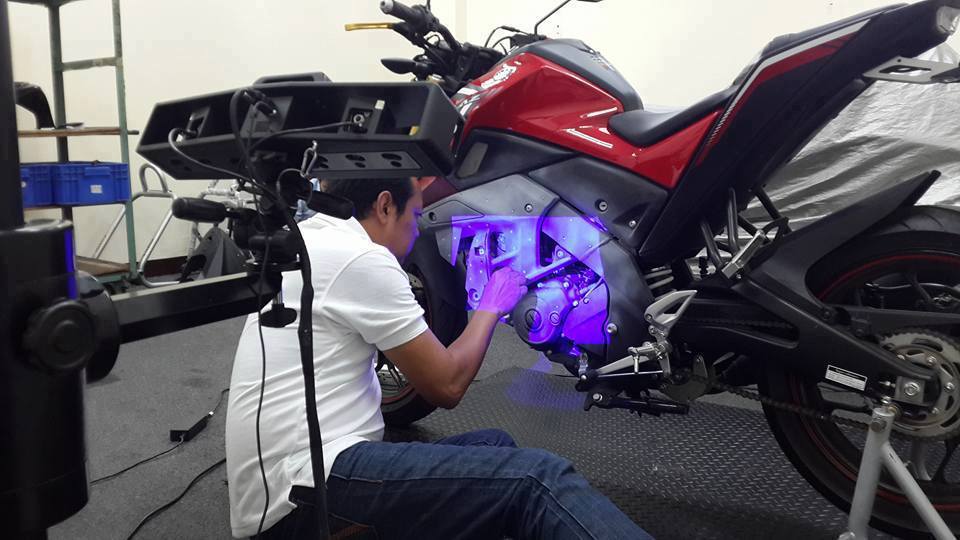
3D scanner | The scanning process is simple.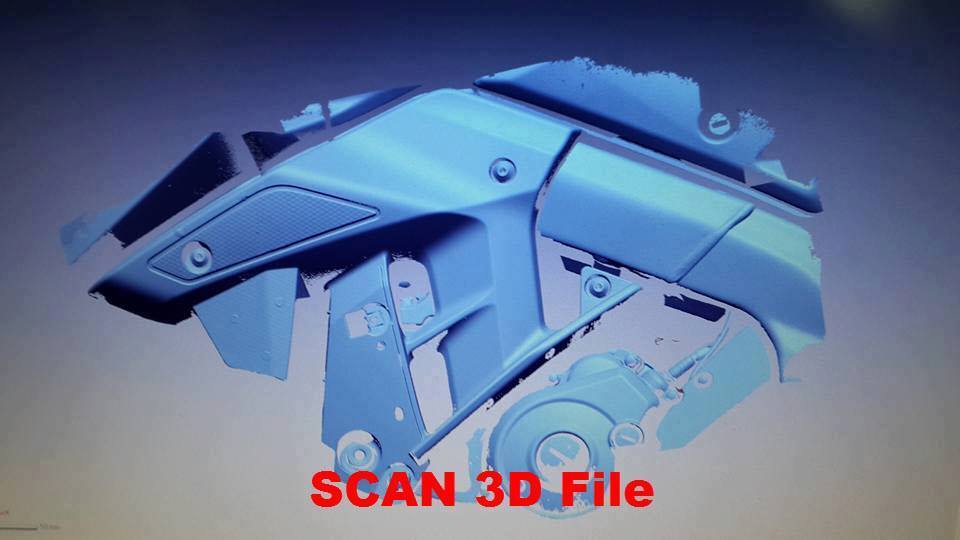
The output is mesh data in STL or OBJ format.
After reverse engineering, the data is saved as STP, IGS, solid… (your choice)
Nguyen Van Cuong
Zalo/ Viber/ Skype: 0975 008 728
Contact CT3D Group
CT3D Group – professional 3D printing, 3D scanning, design and rapid prototyping services nationwide.
- CT3D Thu Duc – Ho Chi Minh City, Hanoi, Hai Phong: in3d.edu.vn – Hotline 0975 008 728 (Mr. Thai)
- CT3D District 6 – Ho Chi Minh City: 3dmaker.vn – Hotline 038 7798308 (Mr. Phuc)
How to read 3D scanner specifications
When comparing scanners in the same price range, buyers often get lost in the numbers. Knowing what each spec really means helps you avoid a scanner that looks “good on paper” but does not fit your needs:
| Spec | What it means | What to watch when comparing |
|---|---|---|
| Single shot accuracy | Error within one single shot | Only reflects a small area, not a whole large object |
| Volumetric accuracy | Error that accumulates with object size | Important for long parts and needed for inspection |
| Resolution / point spacing | The smallest detail it can record | Higher captures fine patterns but makes files heavier |
| Field of view (FOV) | Area scanned in one shot | Small FOV for fine detail, large FOV to scan big objects fast |
| Light source | White light, blue light, laser… | Blue light is usually less affected by ambient light |
A scanner with several lens sets or scan ranges lets you switch between small parts that need fine detail and large objects that need speed. That suits workshops that take on many different kinds of products.
Cost of ownership is more than the scanner price
When budgeting for a scanner, businesses should look at the total cost of ownership, not just the equipment price:
- Processing computer: powerful enough for dense scan data.
- Post-processing software: reverse engineering and 3D inspection software is usually licensed separately and may be billed yearly.
- Consumables: stick-on markers, matte coating spray, replacement calibration boards.
- Training and staff: the time it takes technicians to master the scanner and software.
- Maintenance and calibration: repair costs and regular calibration after the warranty ends.
If your workload is not yet steady, outsourcing can be cheaper at first. You can use a project-based 3D scanning service to test your real needs before setting a budget for buying a scanner.
Frequently asked questions
What are the advantages of a blue-light 3D scanner?
Blue light has a short wavelength, so it usually gives less noisy data and is less affected by ambient light than white light. That is why many scanners for precision engineering use a blue light source.
Is a tripod or handheld scanner better for a wood craft workshop?
A tripod scanner suits paintings, reliefs and medium-sized parts that need fine detail. A handheld scanner is more flexible for large statues, furniture or parts that are already fixed in place.
How much accuracy is enough for mechanical reverse engineering?
It depends on the tolerance of the part you are remaking. As a rule, the scanner’s error should be many times smaller than the part’s required tolerance for the results to be reliable.
Should I buy one scanner for both mechanical and craft work?
You can, if the scanner has several scan ranges or interchangeable lenses. Still, test-scan both kinds of real products before buying to be sure it handles both well.
Related services at CT3D Group
- 3D scanning service – high-accuracy 3D scanning
- Custom 3D printing service
- Custom 3D design service
- CT3D Group network: ct3dgroup.com · in3d.edu.vn – Hotline/Zalo 0975 008 728

