
 Tiếng Việt


The value of 3D printing is undeniable, and its use in medicine brings real humanitarian benefits. Applying 3D printing in medicine helps the world save billions of dollars every year.Photographer builds his own camera with a 3D printer
Concerns about the dangers of 3D printers are justified.
Dental metal 3D printers | Applications of metal 3D printing
Human skin successfully 3D printed.
The secret of this technology is the “ink”, a plasma containing human skin cells. Using a computer, scientists have the printer spray this bio-ink layer by layer onto a mold to form a piece of human skin. The printer can now produce a 100 cm2 patch of skin in just over half an hour. (Source: vtv.vn)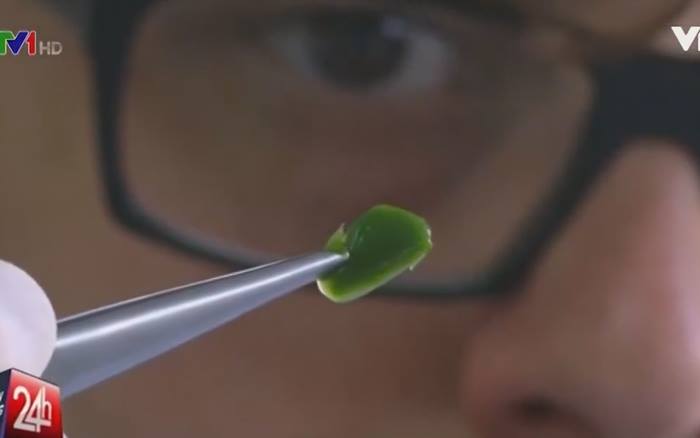
3D printing human bone.
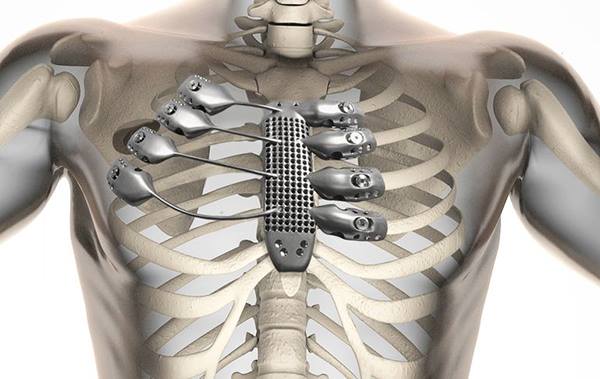 One of the areas where 3D printing has been formally adopted is printing human bone for implants. In 2011, researchers at Washington State University (US) announced they had printed a bone-like structure that acts as a scaffold for new bone cells to grow on before it gradually breaks down. The structure was printed with calcium phosphate ink and tested successfully in animals. Experts hope this method can help treat patients with cracked or broken bones.
3D printed prosthetic arms | 3D printers
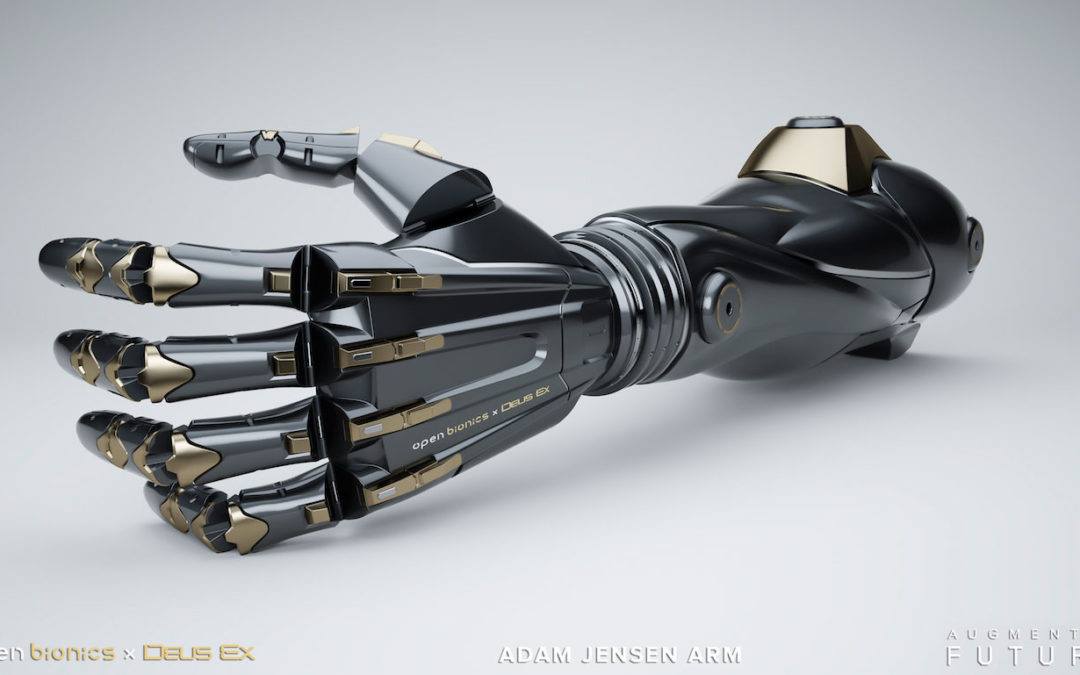
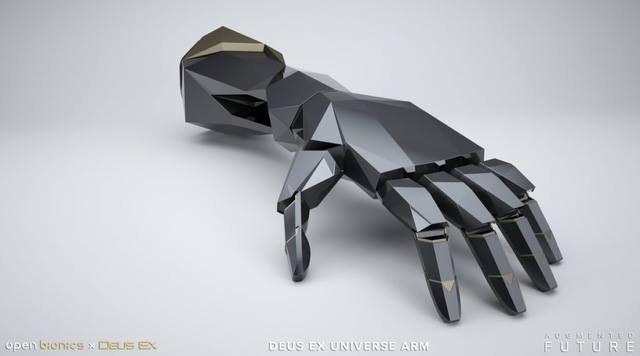 Game developer Eidos-Montreal, part of Square Enix, has teamed up with low-cost prosthetics maker Open Bionics, along with Intel and Razer, to create two prosthetic arm designs for amputees inspired by the blockbuster Deus Ex series: the Adam Jensen Arm, based on the main character of Mankind Divided, and the Deus Ex Universe Arm.
Bionic arms are a central theme of Deus Ex: Mankind Divided, and the main character Adam Jensen has one himself. In the game’s future setting, people fitted with body-enhancing implants feel shunned by society and have to live as an underclass.
The Adam Jensen Arm is highly functional, with flexible fingers and a rotating wrist. The Deus Ex Universe Arm has sharper, more geometric and simpler lines, but looks even cooler.
 Prosthetics inspired by video games are becoming more popular, and they help amputees feel more confident wearing good-looking arms or legs.
Razer will provide its Stargazer camera so people can try these arms in virtual reality at events through motion capture, and see how the prosthetic arm will work.
Like other medical devices, prosthetics are very expensive. But next year Open Bionics will release the 3D designs for free, so people can make them at home. Just send the design to a 3D printer and you have a very cool arm for yourself or a family member.
(Source: Genk)
Source: Internet
Tag: 3D printing in medicine, medical applications of 3D printing, low-cost 3D printer
Contact CT3D Group
CT3D Group – professional 3D printing, 3D scanning, design and rapid prototyping services nationwide.
- CT3D Thu Duc – Ho Chi Minh City, Hanoi, Hai Phong: in3d.edu.vn – Hotline 0975 008 728 (Mr. Thai)
- CT3D District 6 – Ho Chi Minh City: 3dmaker.vn – Hotline 038 7798308 (Mr. Phuc)
Frequently asked questions
Where is 3D printing most widely used in healthcare?
The most common uses today are dentistry (dental models, aligners, restoration molds) and anatomical models for surgical planning. Next come surgical guides, orthopedic braces and custom prosthetic limbs.
Where does the data for 3D printed anatomical models come from?
It usually comes from the patient’s CT or MRI scans. Specialized software segments the bone or organ to be printed, converts it into a 3D mesh and sends it to the printer.
Can 3D printed human organs be used for transplants yet?
Not widely. Bioprinting of tissue and organs is still mostly in research and trials. Uses already applied to real patients focus on metal implants, surgical aids and devices worn outside the body.
What are the advantages of 3D printed prosthetic limbs?
3D printed prosthetics can be designed to fit each person’s body, are light and are easy to replace as children grow. Prototyping usually costs less than traditional methods, and the shape and color are easy to personalize.
Do 3D printed medical products need certification?
Yes. Medical devices used on people, especially implants or products in long contact with the body, must use biocompatible materials and comply with medical device regulations. Models used only for teaching or illustration have simpler requirements.
Related services at CT3D Group
- Custom 3D printing service
- 3D scanning service – high-accuracy 3D scanning
- Custom 3D design service
- CT3D Group network: ct3dgroup.com · in3d.edu.vn – Hotline/Zalo 0975 008 728

