
 Tiếng Việt


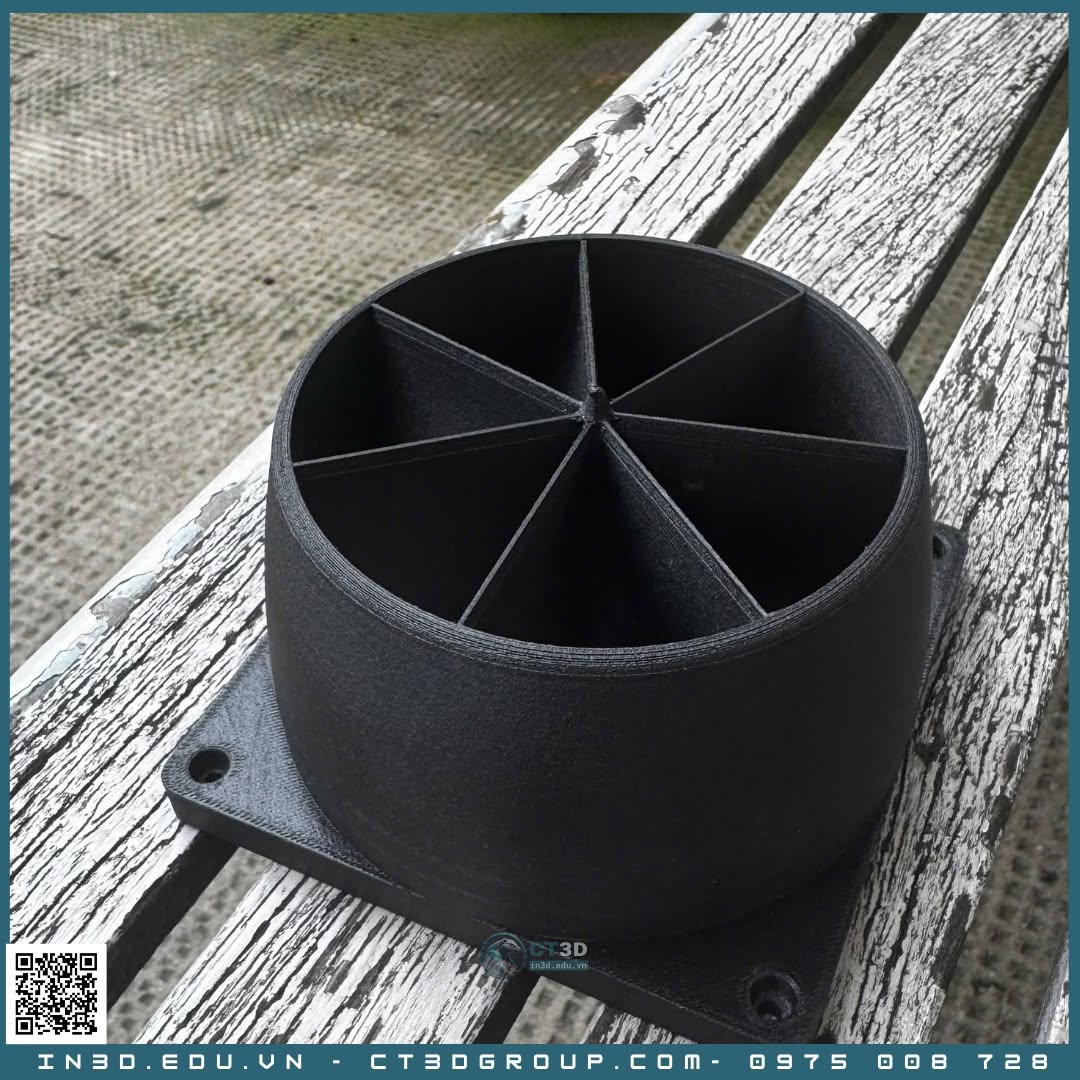
There are many different 3D printing technologies in the world today. Below we list the most common ones so far.
SLA 3D printing technology:
This technology uses light (a laser, UV light or ordinary light) to harden liquid photopolymer (a polymer that cures when exposed to light) held in a vat, layer by layer, to form a 3D object. It was the first 3D printing technology and still gives the thinnest layers available today (very high detail). large-format 3D printers – 3D printing service in Ho Chi Minh City – SolidWorks courses in Ho Chi Minh City
JP 3D printing technology
This is actually similar to SLA 3D printing, but instead of holding the material in a vat, the material is jetted like an inkjet printer. A UV lamp next to the print head cures each layer of photopolymer as it is jetted. Because of this, the technology can print several materials in one part, with each cartridge holding one material.

| See our | products: | |||
| 3D printing | 3D printers | Low-cost 3D printers | 3D scanners | 3D scanning machines |
| SLA 3D printing | FDM 3D printers | 3D printing service | 3D scanning | 3D scan service |
FDM 3D printing technology
This is the most common 3D printing technology today. It uses plastic filament as the raw material. The filament is melted, and the nozzle draws the molten plastic along the outline of each layer’s cross-section, stacking layer on layer to build the 3D part. It is the most widespread technology because it is simple and easy to build. Today’s low-cost DIY printers all use it, and they cost only a few hundred to a few thousand dollars. However, because of the technology’s built-in limitations, DIY printers can only meet average requirements.
- 5 trusted low-cost 3D printing service shops in Vietnam
- Top 5 trusted SolidWorks training centers in Ho Chi Minh City
- Top 5 popular large-format 3D printers in Vietnam
 SLS 3D printing technology
SLS uses powder held in bins. Each layer is spread by a roller that rolls and pulls the material flat into a thin layer. A laser then melts the powder along the layer outline so the new layer bonds to the one below.
3DP 3D printing technology
This technology spreads layers the same way as SLS above, but bonds them like a regular 2D inkjet printer. The ink is both the color and the glue that binds the powder particles together. It can print color onto the object just like a color inkjet printer. “3DP” stands for 3D Printing, the term we use today.
large-format 3D printers – 3D printing service in Ho Chi Minh City – SolidWorks courses in Ho Chi Minh City
LOM 3D printing technology
LOM uses materials that can be made thin, such as paper or wood, in rolls or sheets. Each layer is one sheet of paper or slice of wood. The layer outline is cut by a laser or a blade, and the layers are glued on top of each other to form the 3D object. This technology can produce objects in the colors of the design.
3D printers ——- 3D scanners —— 3D scanning machines
Overview of common 3D printing technologies
3D printing has many technologies, each with its own principle and strengths: FDM melts plastic filament (cheap, common), SLA/DLP cures resin with UV light (smooth, high detail), SLS/MJF sinters PA nylon powder (strong, no supports needed) and SLM/DMLS melts metal powder (real metal parts). Knowing each one helps you pick the right one for your purpose.

Which 3D printing technology should you choose?
A simple rule: FDM for concept models, SLA for good-looking display models, SLS/MJF for load-bearing functional parts and SLM for metal parts. A detailed comparison is in our article comparing SLA, FDM, SLS and SLM 3D printing.
Multi-technology 3D printing services at CT3D
CT3D Group runs many 3D printing technologies and gives unbiased advice on the best solution for each part. Learn more about rapid prototyping.

Frequently asked questions
What 3D printing technologies are there?
The common ones are FDM (filament), SLA/DLP (resin), SLS/MJF (plastic powder) and SLM/DMLS (metal).
Which 3D printing technology is most common?
FDM is the most common and cheapest. Among plastic technologies, SLA gives the nicest, most premium surface.
Which 3D printing technology should I choose?
It depends on the purpose: FDM for concepts, SLA for good-looking models, SLS/MJF for functional parts and SLM for metal.
CT3D Group – Professional 3D printing, 3D scanning, design and rapid prototyping services nationwide. Send your request and get technical advice at in3d.edu.vn – Hotline: 0975 008 728 (Mr. Thai).
Contact CT3D Group
CT3D Group – Professional 3D printing, 3D scanning, design and rapid prototyping services nationwide.
- CT3D Thu Duc – Ho Chi Minh City, Hanoi, Hai Phong: in3d.edu.vn – Hotline 0975 008 728 (Mr. Thai)
- CT3D District 6 – Ho Chi Minh City: 3dmaker.vn – Hotline 038 7798308 (Mr. Phuc)
Related services at CT3D Group
- On-demand 3D printing service
- High-accuracy 3D scanning service
- Custom 3D design service
- CT3D Group network: ct3dgroup.com · in3d.edu.vn – Hotline/Zalo 0975 008 728

