
 English



Liquid resin 3D printing, also called SLA 3D printing, meets the need for large parts with high resolution and a very smooth finish. It answers the most demanding 3D printing service requests from customers. SLA 3D printer systems are usually expensive and demanding to operate. Resin 3D printers produce parts with smooth, attractive surfaces and a high level of finish.
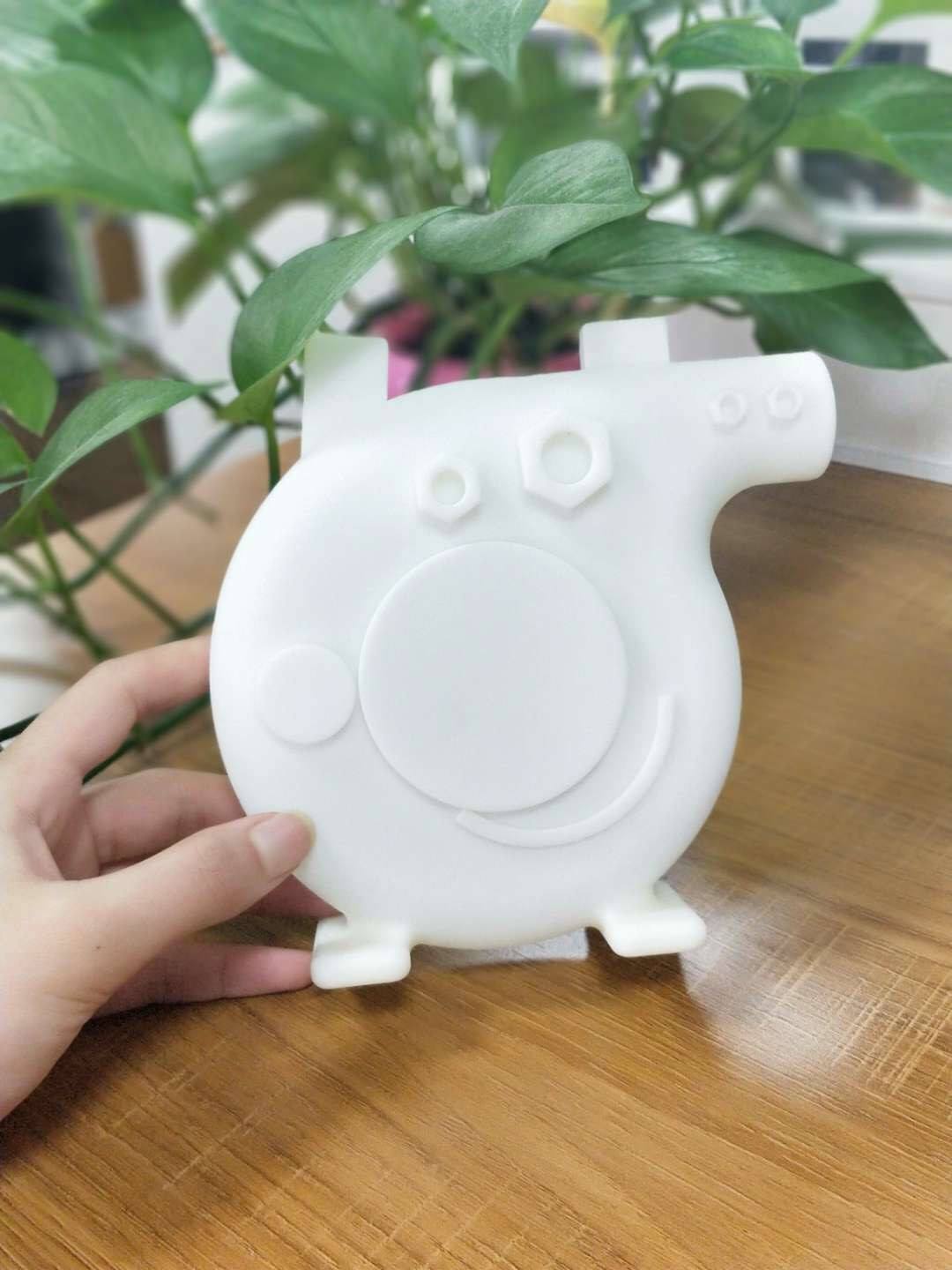
Photos of parts from design to SLA 3D printing
SLA 3D printers are very expensive, but in return they produce smooth parts that can be used right away for many jobs, from engineering to fine arts. And SLA 3D printers come in very large sizes: some machines can print objects up to 2 meters. > Large-format FDM 3D printers
3D printing in Ho Chi Minh City – 3D printing service in Ho Chi Minh City – CT3D Group 3D services



Best sellers:
Credit – Photo source: Penny Hua
Contact CT3D Group
CT3D Group – professional 3D printing, 3D scanning, design and rapid prototyping services nationwide.
- CT3D Thu Duc – Ho Chi Minh City, Hanoi, Hai Phong: in3d.edu.vn – Hotline 0975 008 728 (Mr. Thai)
- CT3D District 6 – Ho Chi Minh City: 3dmaker.vn – Hotline 038 7798308 (Mr. Phuc)
How SLA 3D printing works
SLA (stereolithography) is a 3D printing technology that uses liquid photopolymer resin held in a tray. A UV laser beam traces the outline of each cross-section of the model, hardening the resin at those points. After each layer, the build platform moves by one layer thickness, usually a few tens of microns, and the laser cures the next layer. Repeat this hundreds or thousands of times and you have a finished part.
Because the laser spot is very small and the layers are thin, SLA parts are much smoother than FDM filament prints, with sharp edges and clear small features such as raised text and patterns. That is why SLA is popular for display design models, art models, dentistry and master patterns for silicone molds.
Post-processing after SLA printing
A freshly printed part cannot be used right away. It needs a few post-processing steps:
- Wash off excess resin: soak and rinse in IPA or a dedicated solution to remove uncured resin from the surface.
- Remove supports: cut off the support columns, then lightly sand the support marks.
- Post-cure: UV cure in a curing chamber so the part reaches full hardness and strength.
- Surface finishing: sand, prime, paint or polish clear as required.
SLA vs. FDM when choosing a technology
| Criterion | SLA (resin) | FDM (filament) |
|---|---|---|
| Surface smoothness | Very smooth, layer lines nearly invisible | Visible layer lines; needs sanding for a nice look |
| Small details | Reproduced well | Limited for features under about 1 mm |
| Mechanical strength | Depends on resin; standard resin is fairly brittle | Tougher with ABS, PETG, nylon |
| Best uses | Display models, master patterns for molds, dentistry, jewelry | Functional prototypes, fixtures, large engineering parts |
For large parts that still need a nice surface, a large-format SLA machine can print them in one piece instead of splitting and joining, which cuts seams and finishing time. See CT3D’s large-format SLA 3D printing service or call Hotline/Zalo 0975 008 728 for advice on the right technology.
Frequently asked questions
Do SLA prints yellow or get brittle over time?
Yes. Standard resin can yellow and slowly become brittle with long exposure to direct sunlight. A UV-protective coating or a dedicated engineering resin keeps the part more color-stable and durable. For display models kept indoors, this happens very slowly.
Can SLA print clear parts?
Yes. Clear resin combined with fine sanding and a gloss coat can produce parts that are almost as clear as glass. Common uses are lamp covers, flow models and bottle prototypes. How clear the part gets depends largely on post-print finishing.
Can SLA prints be used as master patterns for silicone molds?
Yes. This is one of the most common uses of SLA, because the silicone mold copies the smooth surface almost perfectly. The master must be fully cured and thoroughly cleaned to avoid inhibiting the silicone cure. The mold can then cast many parts in PU, epoxy or plaster.
Is 3D printing resin toxic?
Liquid resin can irritate skin and has an odor, so wear nitrile gloves and safety glasses and work in a well-ventilated area. Once fully cured, the part is much safer for normal handling. Leftover resin and washing solution must be collected and disposed of properly, never poured down the drain.
Related services at CT3D Group
- Large-format SLA resin 3D printing
- On-demand 3D printing service
- High-accuracy 3D scanning service
- CT3D Group network: ct3dgroup.com · in3d.edu.vn – Hotline/Zalo 0975 008 728

