
 Tiếng Việt



The cost of rapid prototyping and 3D printing comes down to four main factors: technology, material, size and part complexity. Knowing how each one affects the price helps you budget accurately, compare quotes fairly and cut costs without giving up prototype quality.
Four factors that drive prototyping cost
1. Manufacturing technology
This has the biggest impact. From lowest to highest cost, the usual order is: foam CNC ≈ FDM < SLA < SLS/MJF < SLM (metal). An FDM part can cost a small fraction of the same part printed in metal with SLM.
2. Material
Common plastics (PLA, ABS) are cheaper than engineering resins or PA; metal costs many times more than plastic. Beyond the material price, some materials also need costly post-processing (UV curing, heat treatment).
3. Size and volume
The bigger the part, the more material and machine time it takes. In 3D printing, both the actual part volume and the support material count toward cost. In CNC, stock size and machining time are the main factors.
4. Complexity and finish level
Parts with many cavities, thin walls or heavy support needs cost more. Finishing requests such as fine sanding, painting, coating and polishing also add labor cost.
Relative cost by technology
| Technology | Cost level | Main cost drivers |
|---|---|---|
| Foam CNC | Low | Stock size, surface finish |
| FDM | Low | Volume, print time |
| SLA/DLP | Medium | Resin volume, post-processing |
| SLS/MJF | High | Volume, type of PA powder |
| SLM (metal) | Very high | Metal type, machine time, heat treatment |
Note: these are relative levels for comparison, not actual quotes. Real pricing has to be based on the 3D file.

Why get a quote based on your 3D file?
Prototyping prices are hard to estimate in general terms because they depend on the exact geometry of each part. Two parts with the same outer dimensions, one solid and one hollow, can differ several times over in material use. The most accurate approach is to send the 3D file so the supplier can analyze volume, machining time and material. You can send your file for a fast latest 2025 FDM 3D printing quote from CT3D Group, or check out low-cost PLA 3D printing in Hanoi & Ho Chi Minh City.
Seven ways to reduce prototyping cost
- Prototype in stages: use foam CNC or FDM for early checks, and save SLA/MJF for the final finished prototype.
- Optimize the design: remove excess thickness and hollow out areas that don’t need to be solid to save material.
- Match the technology to the purpose: don’t use metal when you only need to check dimensions.
- Combine several parts in one build: make full use of the build plate to reduce setup cost.
- Think about the finish you really need: not every prototype needs a premium paint finish.
- Prepare a clean 3D file: avoid file repair costs and reprints caused by mesh errors or wrong units.
- Order sensible quantities: if you need many copies, a silicone mold can be cheaper than printing each one.
Prototyping cost: an investment that saves money later
Although it costs something up front, prototyping catches errors before production tooling, where fixes cost many times more. A design flaw found at the prototype stage might cost a few hundred thousand VND to fix; the same flaw found at the injection mold stage can cost tens of millions of VND and weeks of rework. Overall, rapid prototyping is an investment that lowers risk and saves money across the whole project.
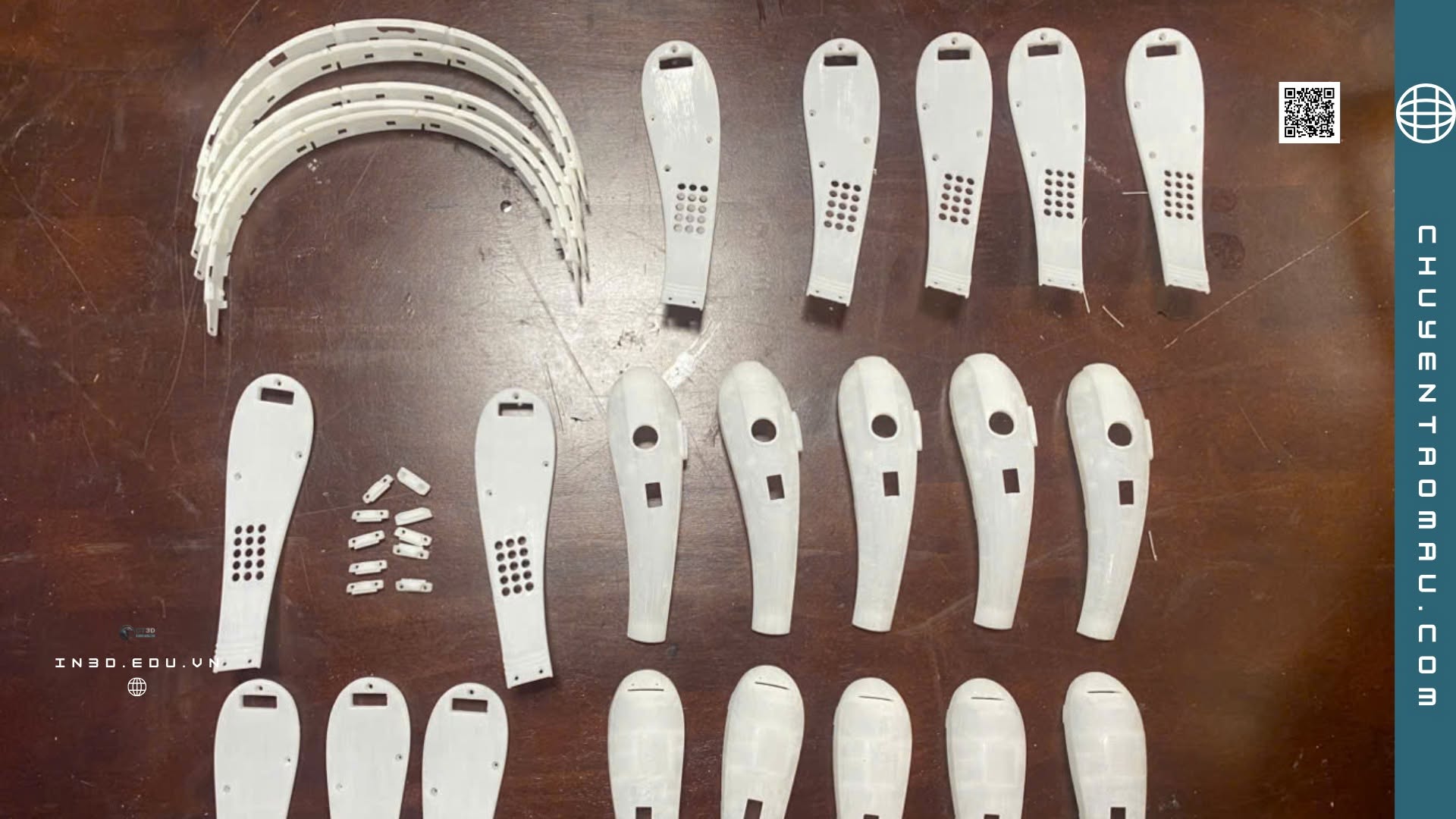
Cost comparison: rapid prototyping vs. traditional tooling
| Criteria | Rapid prototyping | Traditional tooling |
|---|---|---|
| Upfront cost | Low | Very high |
| Lead time | A few hours to a few days | Several weeks |
| Cost of changes | Very low (edit the file) | Very high (rework the mold) |
| Best for | Validation, low volumes | High-volume production |
Frequently asked questions (FAQ)
How is 3D printing cost calculated?
Mainly by material volume, print time, technology/material type and finish level. The most accurate way is a quote based on the 3D file.
How can I make prototyping cheaper?
Prototype in stages, optimize the design to use less material, choose the right technology and prepare a clean file.

Is there a discount for printing multiple copies?
Usually, yes. For larger quantities, batching prints or switching to a silicone mold can lower the cost per part.
Are metal prototypes much more expensive?
Yes. SLM metal 3D printing is the most expensive technology. Use it only when you truly need a load-bearing metal part.
Conclusion
Understanding what drives cost helps you control your budget and get more out of prototyping. Don’t look only at the unit price. Look at the total cost over the project, where rapid prototyping saves money by reducing risk. For an accurate file-based quote and advice on the best approach, contact CT3D Group via hotline/Zalo 0975.008.728.
Related articles
- What is rapid prototyping? A guide to technologies, process & choosing a supplier
- 3D printing technology comparison: SLA, FDM, SLS/MJF and SLM
- What is a silicone mold? Low-cost replication of composite & polyresin parts
Contact CT3D Group
CT3D Group – professional 3D printing, 3D scanning, design and rapid prototyping services nationwide.
- CT3D Thu Duc – Ho Chi Minh City, Hanoi, Hai Phong: in3d.edu.vn – Hotline 0975 008 728 (Mr. Thai)
- CT3D District 6 – Ho Chi Minh City: 3dmaker.vn – Hotline 038 7798308 (Mr. Phuc)
See also: what is 3D printing by CT3D Group for detailed advice.
Related services at CT3D Group
- Custom 3D printing service
- 3D scanning service – high-accuracy 3D scanning
- Custom 3D design service
- CT3D Group network: ct3dgroup.com · in3d.edu.vn – Hotline/Zalo 0975 008 728

