
 Tiếng Việt


CT3D Group is a full-service creative technology group in Vietnam. We specialize in 3D design, 3D scanning, 3D printing, CNC machining, mold making, resin, composite and metal casting, and pilot production for businesses in every industry. With fast, accurate and cost-effective prototyping, CT3D Group handles the whole path from idea → 3D model → prototype → production, serving customers in all 63 provinces of Vietnam and several international markets. Our mission is to shorten R&D time, cut production costs and bring 3D technology into everyday life and industry in the simplest, most professional and most effective way. Learn more: https://in3d.edu.vn/
Contact CT3D Group
CT3D Group – Professional 3D printing, 3D scanning, design and rapid prototyping services nationwide.
- CT3D Thu Duc – Ho Chi Minh City, Hanoi, Hai Phong: in3d.edu.vn – Hotline 0975 008 728 (Mr. Thai)
- CT3D District 6 – Ho Chi Minh City: 3dmaker.vn – Hotline 038 7798308 (Mr. Phuc)
See also: CT3D Group’s professional 3D printing service in Ho Chi Minh City for detailed advice.
Common 3D printing technologies at a glance
Each 3D printing technology has its own strengths, and choosing the right one matters as much as comparing prices. The table below sums up the usual options:
| Technology | Common materials | Advantages | Best for |
|---|---|---|---|
| FDM | PLA, PETG, ABS, TPU | Low cost, large build size | Functional prototypes, fixtures, large models |
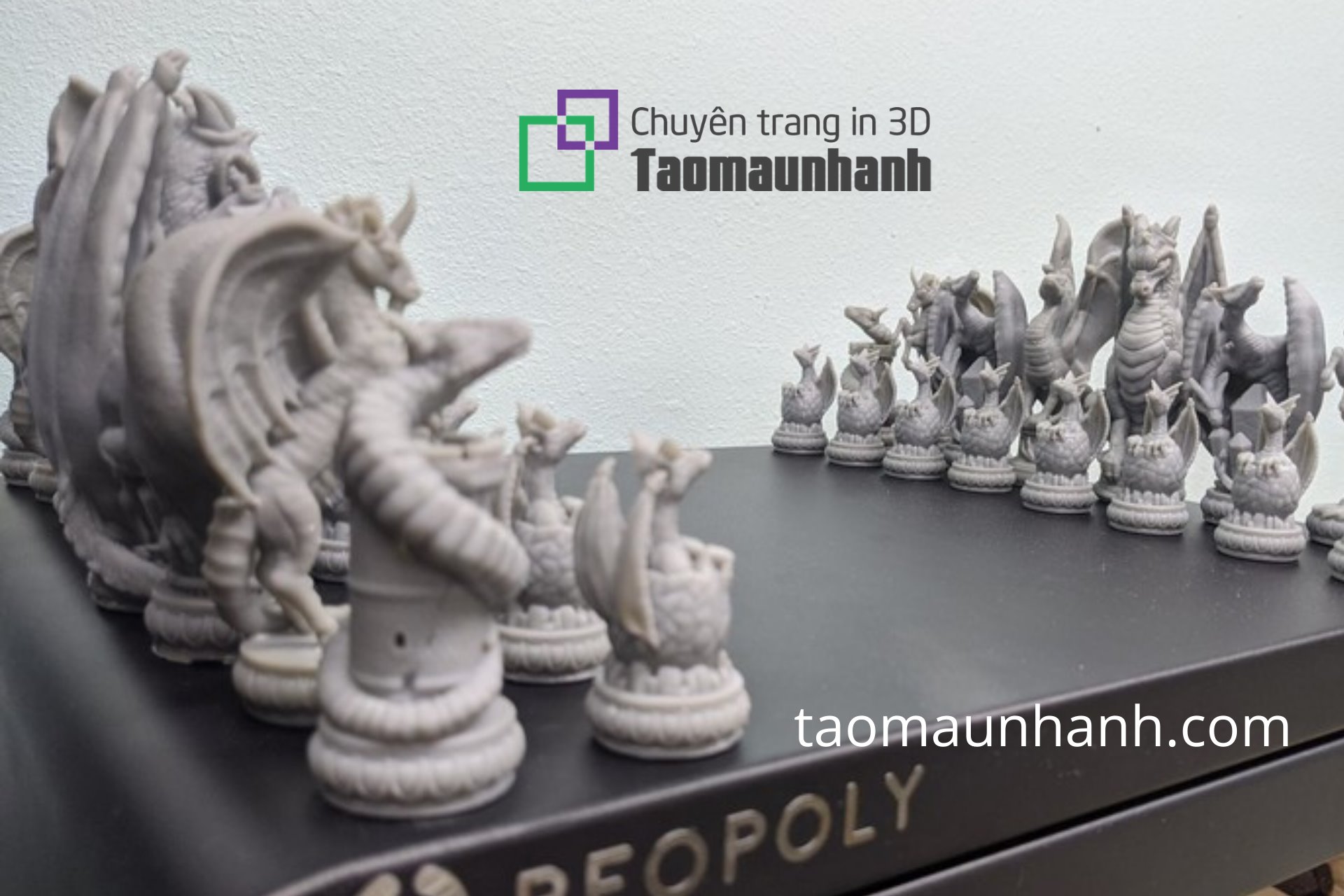
| Resin / SLA | Photopolymer resin | Smooth surface, sharp details | Figurines, jewelry, display models, mold masters |
| MJF / SLS | PA12 nylon powder | Strong, no supports needed, good for small batches | Technical parts, enclosures, pilot runs |
| Metal printing | Stainless steel, aluminum, titanium | Strength and heat resistance of real metal parts | Engineering components, complex geometry |
How to read a 3D printing quote
Two quotes with different totals are not always comparable. When you get a quote, check these items:
- Exact technology and material: “resin printing” can mean standard resin, tough resin or castable resin, and each has a different price.
- Print settings: layer height, infill density, wall thickness.
- Post-processing: whether support removal, sanding, priming and painting are included or charged separately.
- File fixes: whether there are extra fees for repairing or redesigning the file.
- Packaging, shipping and tax: included or added on top.
Choosing a technology for each stage of product development
At the concept stage, FDM prototypes let you check shape and size at low cost. When you need to judge appearance or take marketing photos, resin parts give a nicer surface. For assembly testing or small production runs, MJF or metal printing gives strength close to the final product. If you need a few dozen to a few hundred copies, a 3D print can also serve as the master for a silicone mold, which cuts the cost per part a lot. You can send your file for technology advice through CT3D Group’s 3D printing service.
Frequently asked questions
What should I send to get an accurate 3D printing quote?
Send the 3D file (STL, OBJ, STEP or 3MF), the size you want, quantity, the material you have in mind and any finishing needs such as sanding or painting. If you do not have a file yet, photos with dimensions or a physical sample help the technician make a first estimate. The more complete the information, the closer the quote and the fewer changes later.
Why does the same model cost so much more in resin than in FDM?
The difference comes mostly from material, machine time and post-processing. Resin printing uses liquid resin, which costs more than FDM filament, and it needs washing, UV curing and careful support removal. In return you get a smoother surface and sharper detail. FDM suits technical parts and large models on a budget, while resin suits small models, jewelry and figurines that need fine detail.
How can I lower 3D printing costs without losing quality?
The most effective way is to optimize the design: hollow out large models, cut unnecessary wall thickness and orient the part to reduce supports. You can also pick a layer height that fits the purpose. Functional prototypes do not need ultra-thin layers. Printing several parts in one batch usually lowers the cost per part.
How long does a 3D printing order usually take?
Small, simple parts can often be done in about 1–2 days. Large, detailed models or parts that need painting can take a few days to over a week. Lead time depends on size, technology, quantity and the machine schedule when you order. Let us know early if you have a firm deadline so we can prioritize your job.
Can you print a 3D file that has errors?
Most file errors, such as open meshes, flipped faces or walls that are too thin, can be fixed before printing. The technician checks the file and tells you if the design needs changes, so no material is wasted on failed prints. For serious errors, or if you only have an idea, you can use our 3D design service to rebuild a clean model before printing.
Related services at CT3D Group
- SLM metal 3D printing service
- Large-format SLA resin 3D printing
- Custom 3D printing service
- CT3D Group network: ct3dgroup.com · in3d.edu.vn – Hotline/Zalo 0975 008 728

