
 Tiếng Việt



Low-cost 3D scanner || EinScan Pro Plus || Multi-function 3D scanner.
EinScan Pro | Specs:
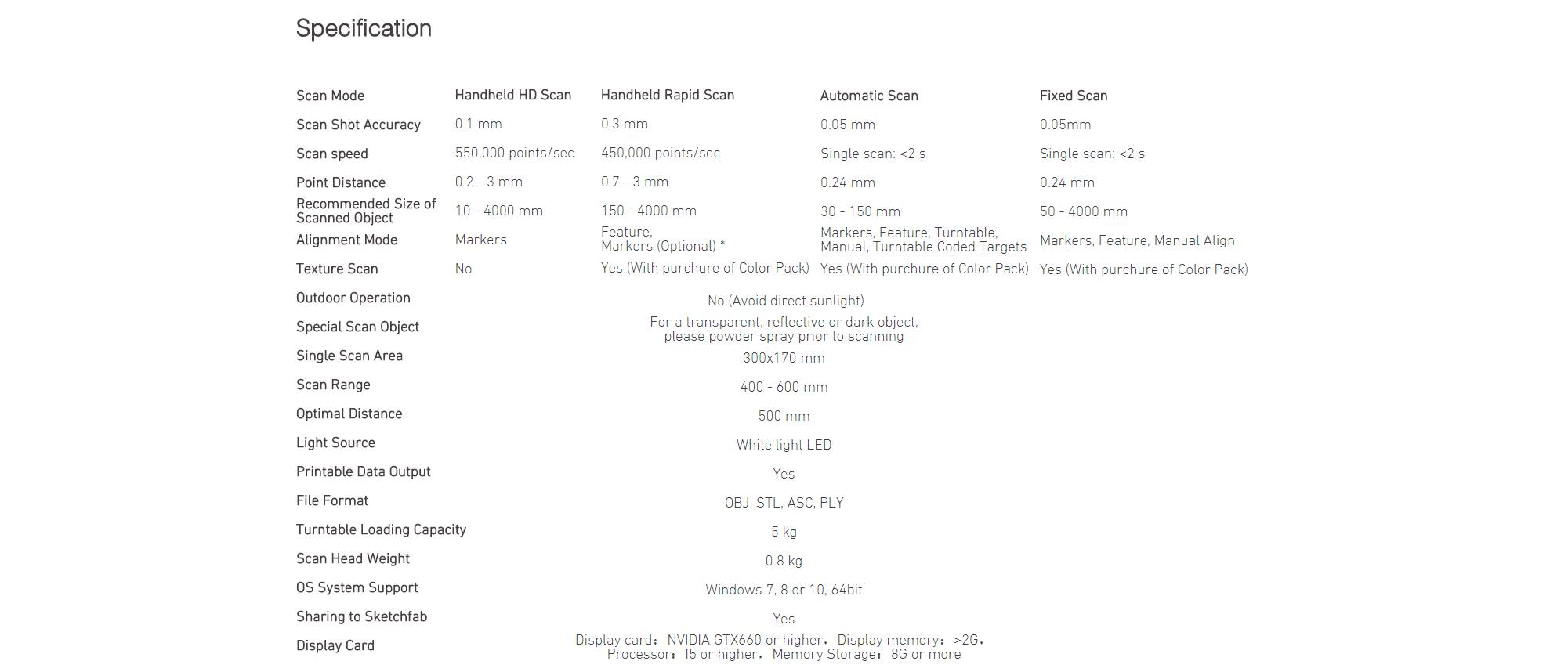
Built on the EinScan Pro 3D scanner, the EinScan Pro Plus keeps all the great features of the EinScan Pro and adds:- A capture area 1.6 times larger (300 x 170 mm).
- Built-in, top-class R2 scanning software.
- HD scan with 100 laser lines.
Ultra-fast HD scan mode.
With 100 laser lines and a wide capture area, it scans fast, runs R2 software and holds international patents. The EinScan Pro Plus scans quickly at 1.3 MP resolution.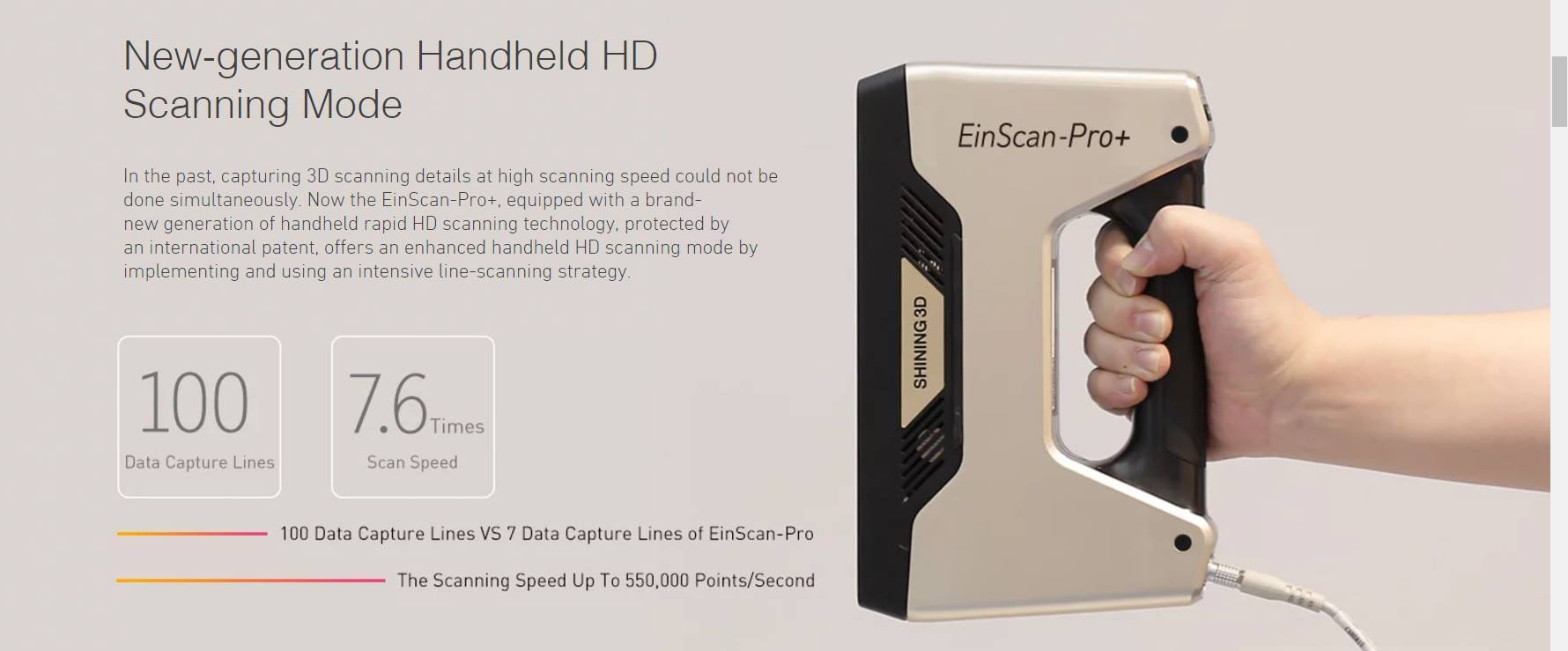
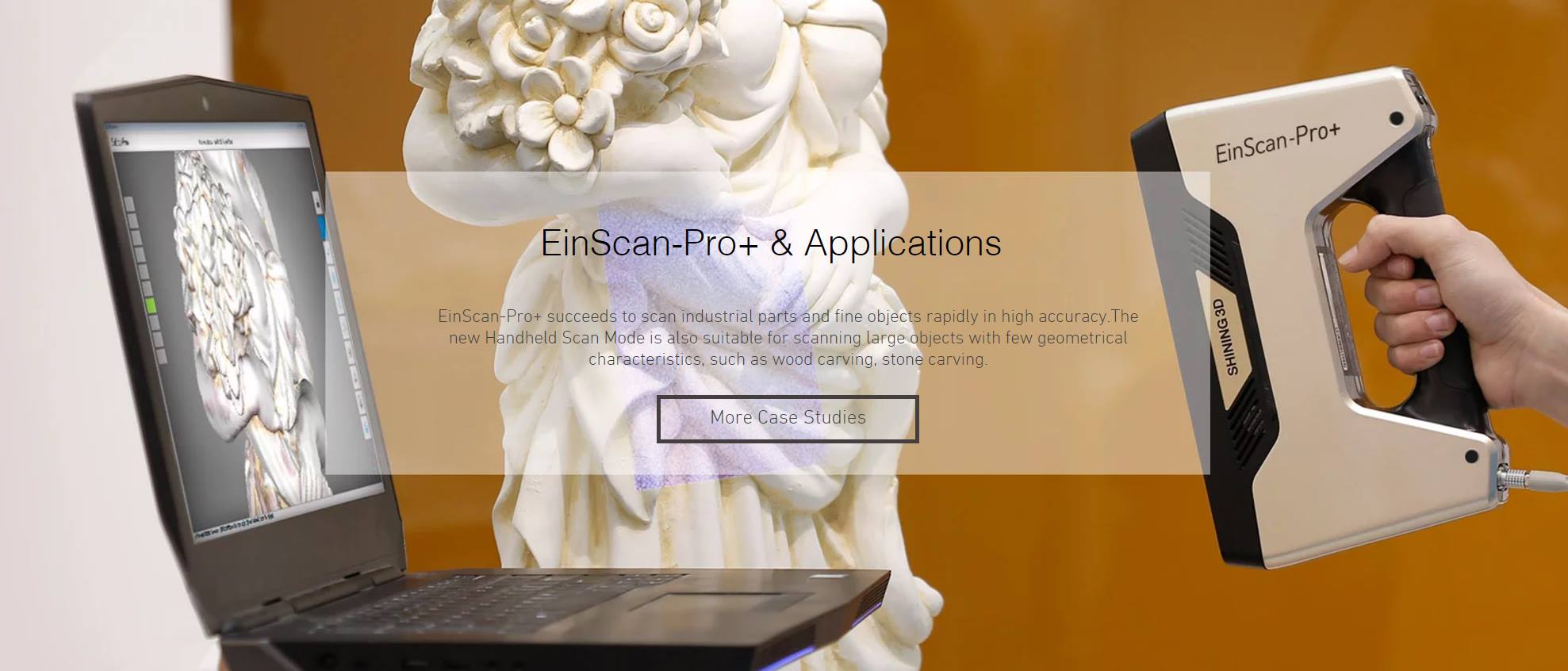
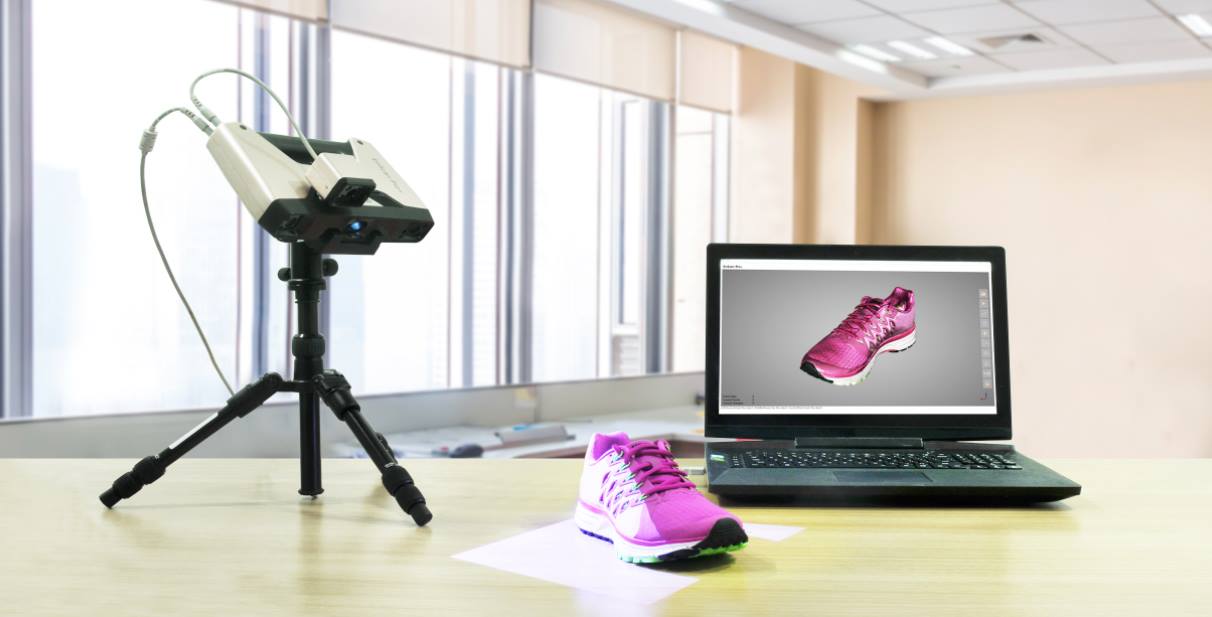
Scan modes – Low-cost 3D scanner.
- Handheld white-light 3D scanning at high speed.
- Handheld HD scanning at high resolution.
- Tripod scanning with high resolution and high accuracy.
- Tripod plus turntable: 100% automatic scanning with 0.05 mm accuracy.
- Color 3D scanning (full color).
Software – Low-cost 3D scanner.
- The scanning software captures points quickly, which speeds up scanning.
- The software lets you process and repair meshes directly.
At under 10,000 USD, the EinScan Pro Plus deserves to be called a top-tier product, since it is rated on par with the Artec Eva, which costs over 20,000 USD. It is strong at every stage of 3D scanning and very versatile. Contact us any time for detailed advice on the device.
Nguyen Van Cuong
Zalo/ Viber/ Skype: 0975 008 728
Contact CT3D Group
CT3D Group – professional 3D printing, 3D scanning, design and rapid prototyping services nationwide.
- CT3D Thu Duc – Ho Chi Minh City, Hanoi, Hai Phong: in3d.edu.vn – Hotline 0975 008 728 (Mr. Thai)
- CT3D District 6 – Ho Chi Minh City: 3dmaker.vn – Hotline 038 7798308 (Mr. Phuc)
Understanding the specs when choosing a handheld 3D scanner
When comparing 3D scanners, buyers often look only at the accuracy figure. In practice, many other specs directly affect the results, and you need to read them in the context of your actual application.
| Spec | What it means | When it matters |
|---|---|---|
| Accuracy | Deviation between scan data and true dimensions | Reverse engineering, inspection, fit and assembly |
| Resolution (point spacing) | How much surface detail is captured | Statues, patterns, artistic details |
| Area per capture | The area the scanner “sees” in one frame | Large objects such as car bodies, molds, furniture |
| Scan speed | How much data is captured per second | Scanning people, large objects, on-site work |
| Volumetric accuracy | Accumulated error when scanning large objects | Long objects that need many scans aligned |
One point that is often overlooked: published accuracy is usually measured under ideal conditions in fixed mode. When you scan large objects handheld, real-world error is usually higher and depends on how the markers are placed and on the operator’s skill.
Scan modes and how to choose
- High-speed handheld: scans large objects quickly, good for capturing the overall shape.
- High-resolution handheld: slower but keeps more detail, used for areas with patterns, ribs or raised lettering.
- Fixed on a tripod: highest accuracy, suited to small and medium parts that need inspection.
- Fixed with a turntable: automated, consistent results, ideal for scanning many identical parts.
Buy a scanner or hire a service?
A good 3D scanner only pays off when it has a skilled operator and the right processing software. If your end goal is a CAD file for production, you also need reverse engineering software and skills. For businesses with occasional needs, using a 3D scanning and reverse engineering service usually gets results fast without investing in equipment, software and staff training.
Frequently asked questions
What is the difference between accuracy and resolution in a 3D scanner?
Accuracy tells you how far the scan data deviates from the true dimensions, while resolution tells you how small a detail the scanner can capture. A scanner can produce a very detailed surface and still have a large overall dimensional error if you scan a long object without markers.
Is a handheld 3D scanner accurate enough for reverse engineering?
For most ordinary mechanical parts, a good handheld scanner gives data that is good enough for reverse engineering. For parts with tight tolerances, add measurements with calipers, micrometers or dedicated measuring equipment on the critical dimensions.
Do I need a powerful computer to use a 3D scanner?
Yes. Scanning and aligning data means processing huge numbers of points, so you usually need a strong CPU, plenty of RAM and a dedicated graphics card. A weak computer will make scanning lag, lose tracking or process very slowly.
Can a 3D scanner scan people?
Yes. A fast handheld scanner can scan people to make portrait statues or character models. The person needs to hold still, and dark hair is usually the hardest area to capture.
Related services at CT3D Group
- 3D scanning service – high-accuracy 3D scanning
- Custom 3D printing service
- Custom 3D design service
- CT3D Group network: ct3dgroup.com · in3d.edu.vn – Hotline/Zalo 0975 008 728

