
 Tiếng Việt



Scan to CAD, or reverse engineering, is a key application of 3D scanners. It is arguably the single most important use of a 3D scanner.
Scanning a supercar frame with the EinScan Pro Plus 3D scanner
EinScan Pro 3D statue scanner | An automated statue scanning solution
Applications of the EinScan Pro Plus color 3D scanner | David Massaroni
Scan to CAD
- Step 1. 3D scan the product to be designed and export the output as STL.
- Step 2. Import the STL file from step 1 into the reverse engineering software.
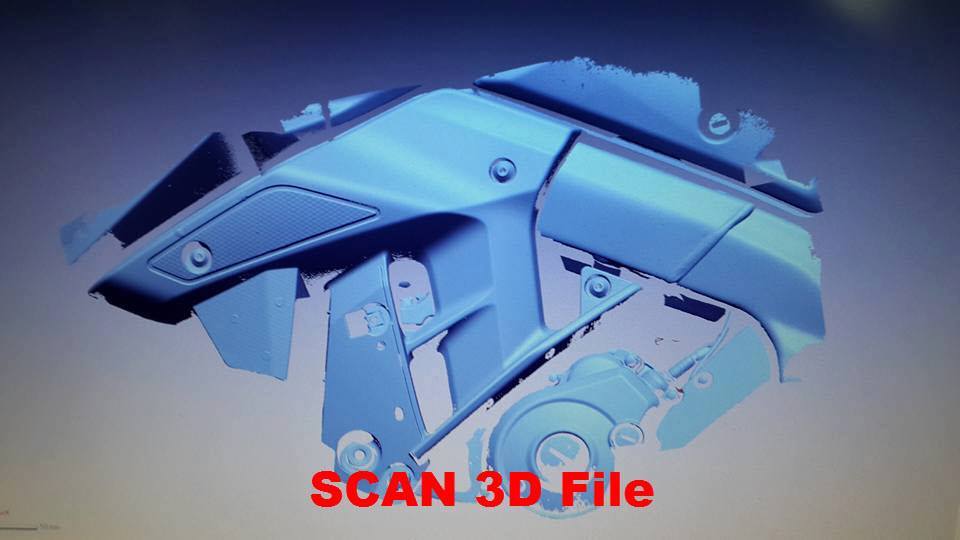
- Step 3. Use the reverse engineering software to build surfaces from the STL scan data and export the CAD data you need.
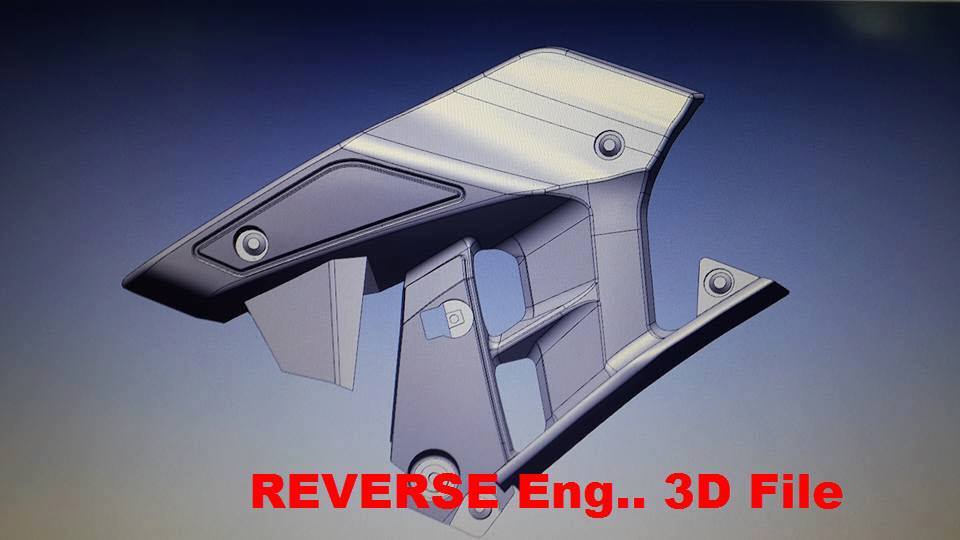
Scan to CAD images

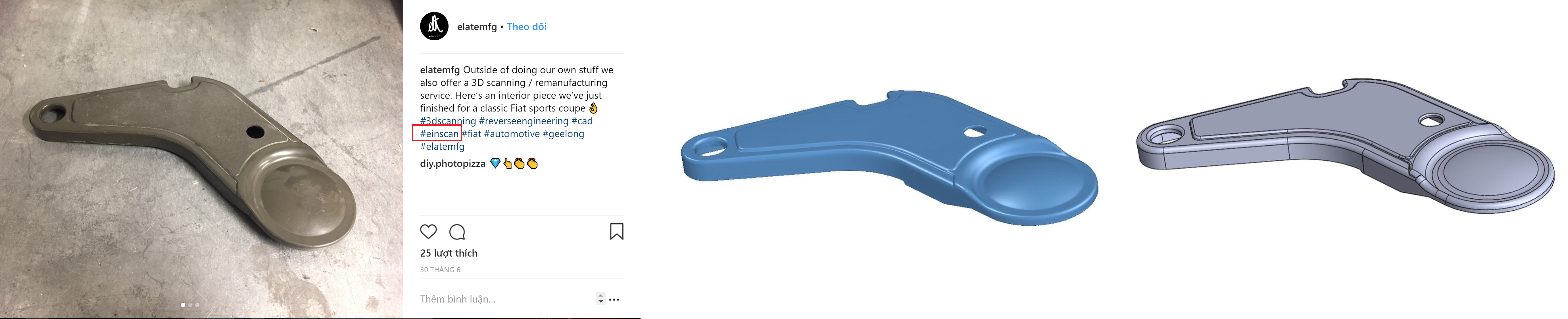 Today, reverse engineering supports many different industries. From motorbike and car customization to 3D printing and rapid prototyping, they all rely on the reverse engineering, or Scan to CAD, technology we are looking at here.
But the cost of a 3D scanner (3D scanning machine) is still high, so market demand has slowed. Instead, companies look for a 3D scanning service and a reverse engineering service (Scan to CAD service). As demand for these services grows, more providers enter the market. But there are still few with the right equipment and a highly skilled team. If you need 3D scanning or reverse engineering services, please contact us directly for advice.
Our 3D printing service also supports companies in Vietnam and abroad. You are welcome to visit our 3D printing and 3D scanning equipment and service showrooms in Hanoi and Ho Chi Minh City.
Contact Cuong at 0975 008 728. Thank you!
An introduction to the EinScan Pro Plus scanning process – Shining 3D
Contact CT3D Group
CT3D Group – professional 3D printing, 3D scanning, design and rapid prototyping services nationwide.
- CT3D Thu Duc – Ho Chi Minh City, Hanoi, Hai Phong: in3d.edu.vn – Hotline 0975 008 728 (Mr. Thai)
- CT3D District 6 – Ho Chi Minh City: 3dmaker.vn – Hotline 038 7798308 (Mr. Phuc)
Real-world uses of Scan to CAD across industries
Scan to CAD is not just for large design offices. In many small and mid-sized workshops, it is the fastest way to get accurate data when the original drawings are lost or never existed. Common uses include:
- Mechanical and maintenance: remaking gears, pump impellers and imported machine parts that no longer have spares.
- Cars and motorbikes: body kits, trim pieces and accessory brackets that fit the body exactly.
- Molds: digitizing old molds for repair, duplication or a move to CNC machining.
- Consumer goods: improving existing products, resizing packaging and device housings.
- Medical: designing braces and supports that follow the patient’s body shape.
- Art and heritage: digitizing statues and reliefs for restoration or replicas.
What to prepare before ordering a Scan to CAD service
To help the engineer get it right from the start, customers should prepare the following:
| Information | Why it matters |
|---|---|
| What the file is for (3D printing, CNC, mold making, archiving) | Sets the level of detail and the CAD modeling method |
| Key mating dimensions and tolerances | Puts accuracy where it counts |
| Mating parts (if any) | Lets the fit be checked after modeling |
| The CAD software you use | Determines the right delivery format |
| Changes wanted compared with the original | Improvements can be made during modeling |
The part should also be cleaned, and taken apart if individual components need scanning. For shiny or transparent parts, the service provider will apply matte powder before scanning.
Checking CAD file quality after reverse engineering
One step that is often skipped is verifying the CAD file after modeling. The standard method is to overlay the CAD file on the original scan data, run a deviation analysis and export a color map showing positive and negative deviation. This report tells the customer how closely the model follows the part and which areas were deliberately adjusted to nominal dimensions. You can read about the full process on our reverse engineering from 3D scan data service page.
Frequently asked questions
Is Scan to CAD as accurate as measuring with calipers?
It is usually more accurate for complex shapes. Calipers only measure one dimension at a time, while a 3D scanner captures the entire surface, especially curves and freeform surfaces that hand tools cannot measure.
Can a product be reverse engineered and improved at the same time?
Yes. After rebuilding the original model, the engineer can adjust dimensions, add stiffening ribs, change the styling or optimize for a new manufacturing method right in the CAD file.
Can very small parts be used for Scan to CAD?
Yes, but it takes a high-resolution scanner and a turntable. For very small parts or ones with many deep cavities, manual measurement may be needed to fill in areas the scanner cannot reach.
Do I need to send the physical part, or just an existing scan file?
You can send an existing scan file if its quality is good enough. But scan data with holes, noise or missing angles lowers accuracy, so in many cases rescanning the real part gives more reliable results.
Related services at CT3D Group
- Reverse engineering service
- 3D scanning service – high-accuracy 3D scanning
- Custom 3D design service
- CT3D Group network: ct3dgroup.com · in3d.edu.vn – Hotline/Zalo 0975 008 728

