
 Tiếng Việt



Rapid prototyping is the process of quickly making a physical prototype from 3D design data, usually within 24 to 72 hours, using technologies such as 3D printing, foam CNC, wood CNC and silicone mold casting. The goal is to check a product’s form, size and function before investing in mass production. In modern product development, this step largely determines time to market and how much risk the whole project carries.

This article covers everything you need to know about rapid prototyping: what it is, its role in R&D, the common technologies, a standard process, materials, cost, common mistakes and how to choose a reliable supplier.
What is rapid prototyping?
Rapid prototyping is a group of techniques that turn a computer design (a CAD/STL file) into a physical object you can hold, as fast as possible. The term appeared in the late 1980s with the birth of 3D printing, and today it also covers high-speed CNC machining and soft mold casting.
The core difference from traditional manufacturing is speed and flexibility. Instead of machining a hard mold that takes weeks and costs a lot, a business gets a real prototype in a few hours to a few days, and can edit the file and remake it with almost no tooling cost.

Rapid prototyping vs. rapid manufacturing
Many people confuse the two. Rapid prototyping focuses on making prototypes to test and approve a design. Rapid manufacturing uses the same technologies to produce end-use parts in small quantities. The line between them keeps blurring as 3D printing and CNC quality improve.
The role of rapid prototyping in product development
New product development usually goes through these stages: idea → design → prototype → testing → tooling → mass production. Rapid prototyping sits in the middle and acts as the “bridge” between the drawing and the real product. This is where every design assumption is tested with a physical object: how it feels in the hand, wall thickness, assembly clearances, weight and ergonomics.
The earlier you catch a mistake at the prototype stage, the cheaper it is to fix. A change in the 3D file is nearly free; the same change found after a steel mold has been machined can cost tens of millions of VND and several weeks.


Benefits of rapid prototyping services
- Shorter time to market: having a prototype in 1–3 days lets you review and lock the design fast and launch ahead of competitors.
- Cheaper trial and error: editing a file and reprinting costs far less than reworking a machined hard mold.
- Real-world validation: you catch problems a screen can’t show.
- Better communication: a physical prototype convinces clients, investors and review boards far better than a drawing.
- Material flexibility: from flexible and rigid plastics and clear resin to metal, foam and wood, you can pick the right material for each test.
- Lower tooling risk: you only build production molds once the design has been confirmed with a prototype.
Common rapid prototyping technologies
There is no absolute “best” technology. Each method is strong in a different area: detail, materials, size or cost. Here are the most widely used ones.
3D printing (additive manufacturing)
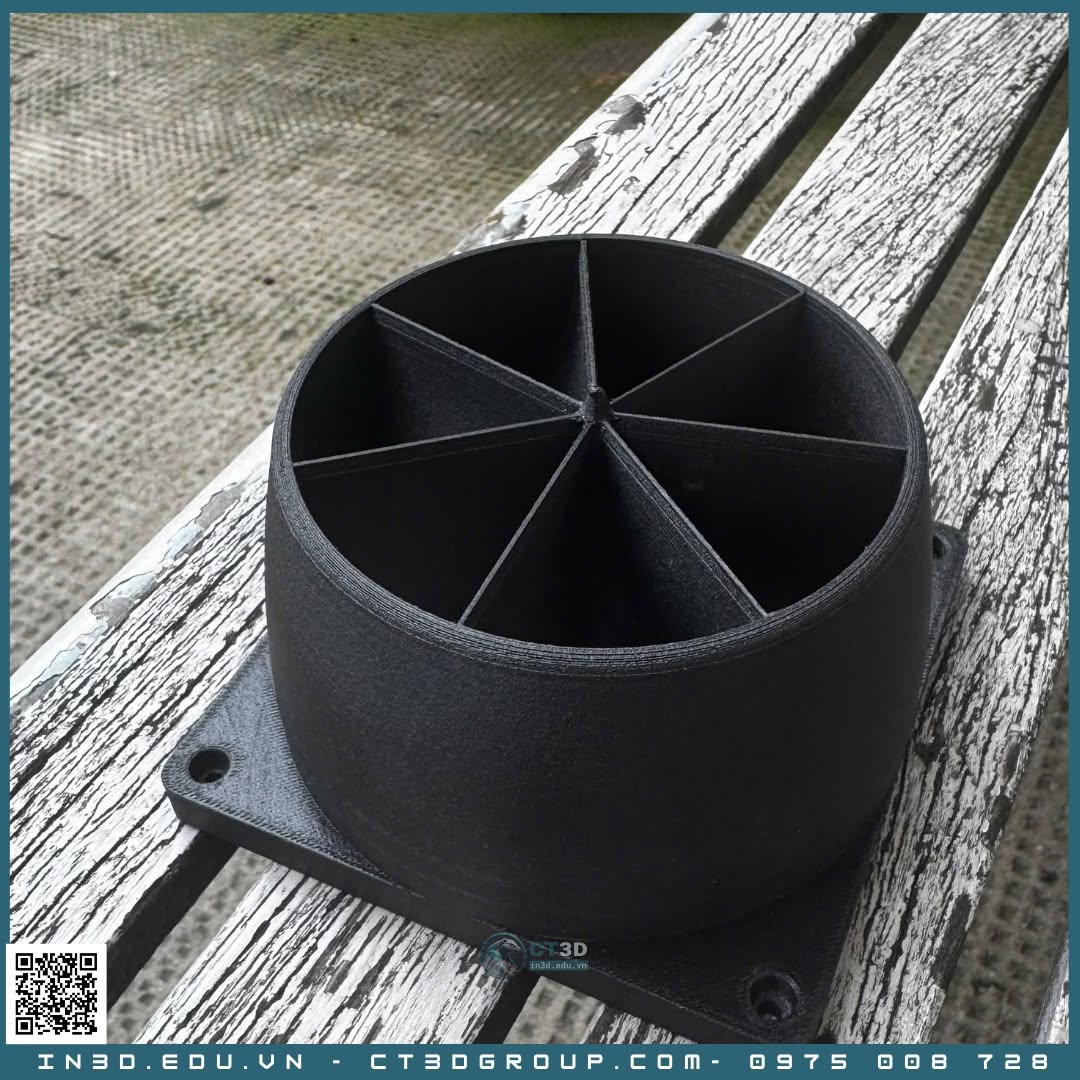
3D printing builds material layer by layer and handles complex, hollow shapes that subtractive machining struggles with. The main types are:
- FDM: filament printing (PLA, ABS, PETG), low cost, good for concept models and fit checks.
- SLA: laser resin printing with a very smooth surface and sharp detail, ideal for display models and fine parts.
- SLS/MJF: sintered PA (nylon) powder for strong, flexible, load-bearing parts, with no supports needed.
- SLM: metal 3D printing for mechanical components that need high strength. Large-format SLM metal 3D printing capacity is still fairly rare in Vietnam.

Foam CNC and wood CNC
CNC machines cut a 3D profile from a solid block of material. Foam CNC makes large prototypes very quickly and cheaply, ideal for full-size checks or display models. Wood CNC gives durable, rigid, detailed prototypes, good for product mock-ups and templates.
Silicone molds
When you need many identical copies at a reasonable cost, such as composite or polyresin products, silicone mold casting balances speed and quantity and is much cheaper than a steel mold.
Comparison of rapid prototyping technologies
| Technology | Detail | Speed | Cost | Best for |
|---|---|---|---|---|
| FDM | Medium | Fast | Low | Concept models, fit checks |
| SLA | Very high | Medium | Medium | Display models, statues, fine parts |
| SLS/MJF | High | Medium | High | Functional parts, small production runs |
| SLM (metal) | High | Slow | Very high | Mechanical components, engineering parts |
| Foam CNC | Medium | Very fast | Low | Large models, displays |
| Wood CNC | High | Fast | Medium | Durable models, mock-ups, decor |
| Silicone mold | High | Medium | Low (per unit) | Replicating composite, polyresin parts |
A standard rapid prototyping process
Step 1 – Request & files. You send a 3D file (STL, STEP, OBJ…), drawings, photos or a physical sample. No file yet? The engineering team can provide custom 3D design and 3D scanning to build a file from your idea or an existing part.
Step 2 – Advice & quote. Engineers recommend the technology, material and lead time that best fit your purpose, with a transparent quote based on volume and complexity.
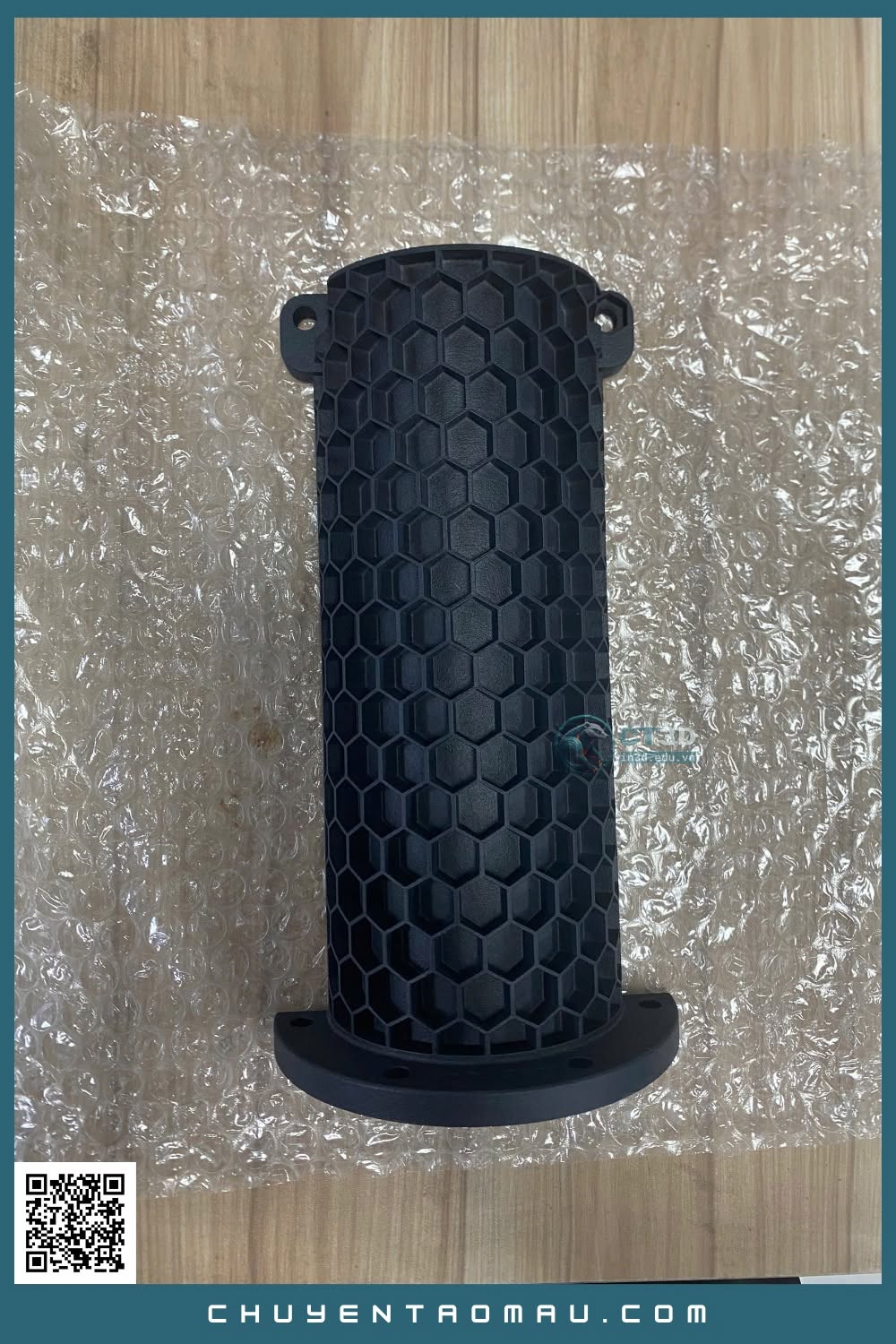
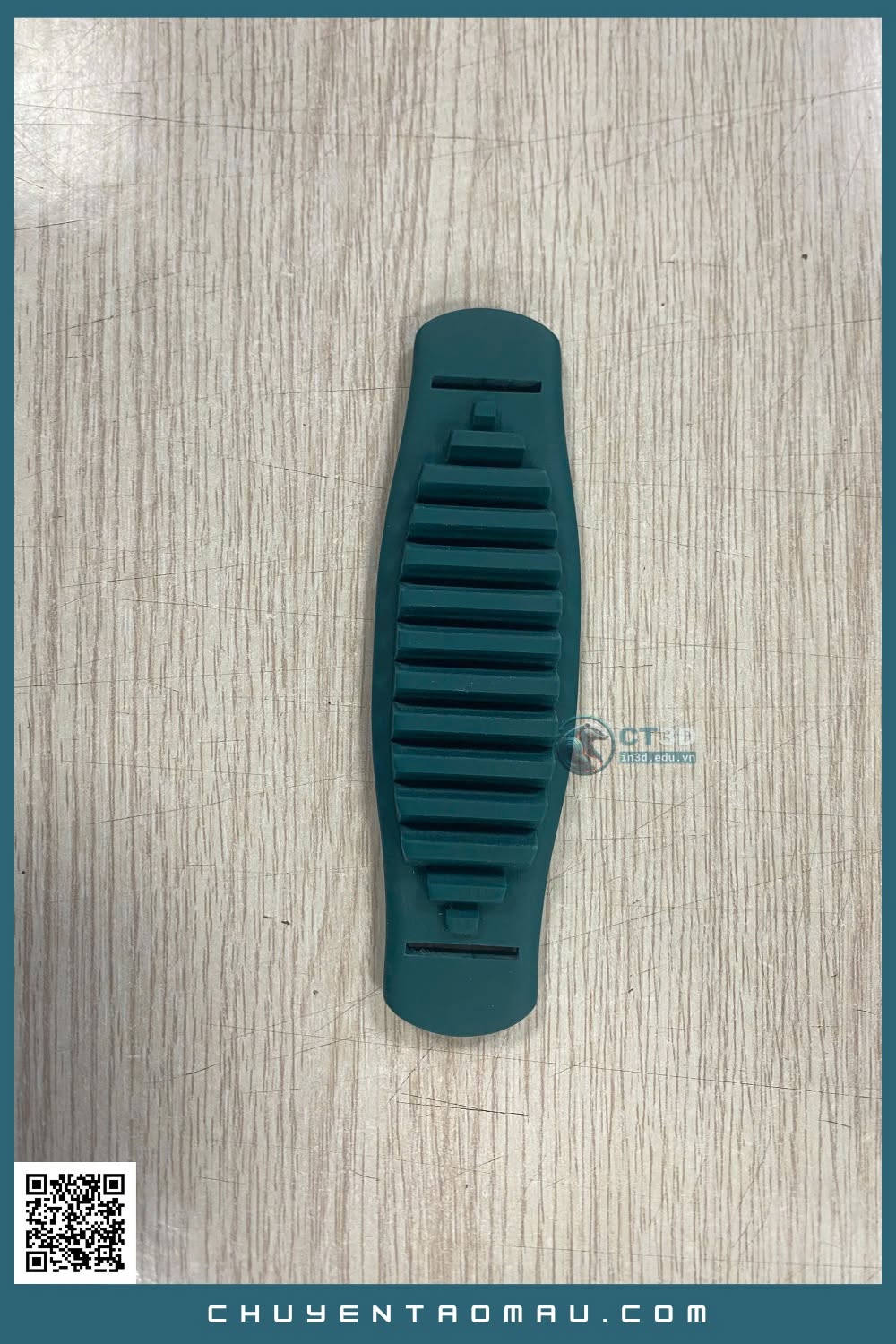
Step 3 – Making the prototype. The prototype is 3D printed, CNC machined or cast according to the agreed plan, with quality control at each stage.
Step 4 – Surface finishing. Sanding, painting and surface treatment as required, so the prototype looks and feels like the real product.
Step 5 – Delivery & revisions. Prototypes are delivered anywhere in Vietnam. If changes are needed, the file is adjusted and the part remade quickly.

Common rapid prototyping materials
The material you choose depends on the prototype’s purpose:
- PLA/ABS/PETG: common FDM plastics for concept models.
- Standard & engineering resins: for smooth, highly detailed prototypes; clear and heat-resistant grades are available.
- PA12 (nylon): strong, flexible and load-bearing, used for functional parts.
- Metal (steel, aluminum, titanium): for load-bearing mechanical parts.
- Foam, wood: for large models and display pieces.
- Composite & polyresin: for end products cast from silicone molds.
Rapid prototyping applications by industry
Industrial design & mechanical engineering: machine part prototypes, device housings, components, and electronics enclosure prototypes for assembly checks.
Consumer goods & packaging: product and packaging mockups to approve the design before production.
Art & statues: custom 3D statues, composite and polyresin statues, decor items and corporate emblems.
Architecture & interiors: architectural models, decorative details and sample products.
Healthcare & education: anatomical models, visual teaching aids and research samples.
What does rapid prototyping cost depend on?
Cost is driven by four factors: technology, material, size and complexity of the part. A large foam CNC model costs much less than a metal 3D printed part of the same size. To optimize your budget, use foam CNC or FDM for early test rounds, then move to SLA/MJF for the final finished prototype.
Common prototyping mistakes
- Skipping prototyping to save money: this often leads to costly errors once production tooling has started.
- Choosing the wrong technology: for example, using expensive SLM for a prototype that only needs a size check.
- A 3D file that isn’t print-ready: mesh errors, walls that are too thin, wrong units.
- Doing only one prototype round: good products usually need several iterations to get right.
How to choose a reliable rapid prototyping supplier
When evaluating a supplier, check four things: (1) whether they have a real workshop and machines or are just a middleman; (2) whether their range of technologies is wide enough to give objective advice instead of pushing what they happen to have; (3) whether they can take you on to production, including mold making and composite/polyresin casting, if you need copies; and (4) a portfolio of real projects that proves their skill.

One example of a trustworthy track record is CT3D Group, a hands-on manufacturer with a real workshop that offers large-format SLM metal 3D printing. The team has worked on restoring the Our Lady of La Vang statue and building the largest reclining Buddha statue in Vietnam, and is trusted by more than 100 partners.
Service areas
Rapid prototyping and custom 3D printing services now cover the whole country, with custom 3D printing in Ho Chi Minh City, Hanoi, Da Nang, Hai Phong, Can Tho and other provinces. Customers far away just send their 3D file by email/Zalo, and the prototype is made and shipped by express delivery to their door.
Frequently asked questions (FAQ)
How long does rapid prototyping take?
Depending on complexity, most prototypes are done in 24–72 hours; simple parts can be finished the same day.
Can I get a prototype made without a 3D file?
Yes. The engineering team can create a custom 3D design from your idea or drawing, or 3D scan and reverse engineer your physical sample.
Should I choose 3D printing or CNC for prototyping?
3D printing suits complex, hollow and finely detailed parts. Foam/wood CNC suits large prototypes that need to be fast and cheap. Engineers will recommend the best option for your purpose.
Can custom 3D printing produce metal parts?
Yes. SLM metal 3D printing can print parts directly in steel, aluminum and titanium with high precision.
Can I go straight to series production after prototyping?
Yes. Once the prototype is approved, the supplier can make a silicone mold and produce composite or polyresin parts right away, so you move smoothly from prototype to production.
How is rapid prototyping cost calculated?
It’s based on technology, material, size and complexity. The most accurate way is to send your 3D file for a specific quote.

Conclusion
Rapid prototyping is no longer an “optional” step. It’s a competitive lever: whoever validates ideas faster and cheaper gets to market first. Choosing the right technology and a partner with a real, hands-on workshop largely determines how well the whole product development process goes. For advice on the best prototyping solution, contact CT3D Group via hotline/Zalo 0975.008.728 or visit in3d.edu.vn.
Related articles
- 3D printing technology comparison: SLA, FDM, SLS/MJF and SLM
- Foam CNC & wood CNC in rapid prototyping: when are they cheaper than 3D printing?
- What is a silicone mold? Low-cost replication of composite & polyresin parts
- Rapid prototyping & 3D printing cost: what drives the price and how to optimize it
Contact CT3D Group
CT3D Group – professional 3D printing, 3D scanning, design and rapid prototyping services nationwide.
- CT3D Thu Duc – Ho Chi Minh City, Hanoi, Hai Phong: in3d.edu.vn – Hotline 0975 008 728 (Mr. Thai)
- CT3D District 6 – Ho Chi Minh City: 3dmaker.vn – Hotline 038 7798308 (Mr. Phuc)
See also: CT3D Group’s trusted 3D printing workshop in Hanoi for detailed advice.
Related services at CT3D Group
- Custom 3D printing service
- 3D scanning service – high-accuracy 3D scanning
- Custom 3D design service
- CT3D Group network: ct3dgroup.com · in3d.edu.vn – Hotline/Zalo 0975 008 728

