
 Tiếng Việt



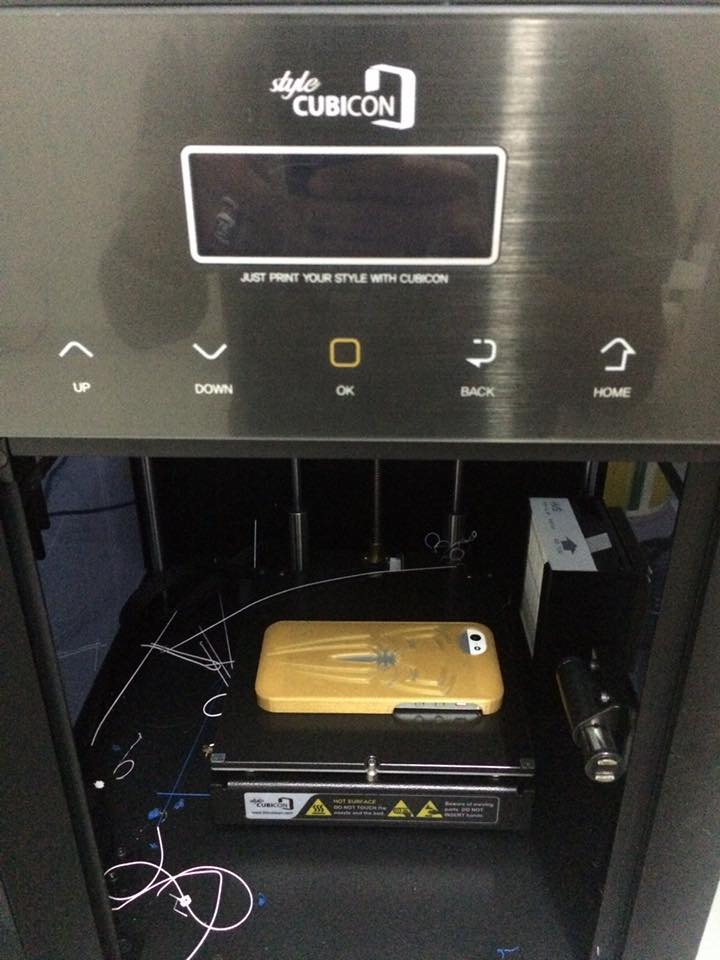
The Cubicon Style is a 3D printer imported from South Korea, known for high stability and good surface quality.
Cubicon Style 3D printer:
- Build size: 150*150*150 (mm) of print volume.
- Smart print head that prints ABS, PLA and TPU (flexible, rubber-like plastic).
- Heated bed with a flat glass surface and auto leveling.
- Enclosed build chamber with a nano filter to remove plastic fumes.


Contact CT3D Group
CT3D Group – Professional 3D printing, 3D scanning, 3D design and rapid prototyping services nationwide.
- CT3D Thu Duc – Ho Chi Minh City, Hanoi, Hai Phong: in3d.edu.vn – Hotline 0975 008 728 (Mr. Thai)
- CT3D District 6 – Ho Chi Minh City: 3dmaker.vn – Hotline 038 7798308 (Mr. Phuc)
Which material should you use to 3D print a phone case?
A phone case is one of the easiest and most fun things to make on an FDM 3D printer, but the material decides most of how it feels in use. Each common plastic has its own pros and cons:
| Material | Properties | Best for |
|---|---|---|
| TPU (flexible) | Soft, elastic, good impact resistance, easy to put on and take off | Everyday cases, corner-protection cases |
| PLA | Rigid, easy to print, nice surface, many colors | Decorative cases, design prototypes |
| PETG | Tougher than PLA, better heat resistance, less brittle | Hard cases that need more durability |
| ABS | Heat resistant, can be surface finished; needs an enclosed printer | Hard cases, parts to be painted or smoothed |
In practice, TPU is usually the most popular choice for phone cases because of its snug fit and shock absorption. Rigid plastics like PLA work well when you want patterns or raised text, or to test a design before mold-based production.
How to design and print a phone case that fits
To get a case that fits on the first try, follow these steps:
- Get exact dimensions: use the manufacturer’s dimension drawing or 3D scan the phone to get the real positions of the camera, buttons and charging port.
- Design in a fit clearance: usually leave a small gap between the case and the phone. With TPU you can go tighter because the material stretches.
- Choose a good print orientation: the back of the case usually sits on the bed for a flat, clean surface and to avoid supports on visible areas.
- Print a test and adjust: print a test piece, check the fit at the buttons and camera, then adjust the model.
- Finish: clean up the edges, and paint or gloss coat if you used a rigid plastic.
If you need a batch of sample cases for a gift program, want to test accessory designs or need TPU prints with consistent quality, see our on-demand 3D printing service for advice on the right material and print technology.
Frequently asked questions
How long does it take to 3D print a phone case?
Usually a few hours per case on an FDM printer, depending on layer height, infill and material. TPU often prints slower than PLA because flexible filament needs steady extrusion.
Is a 3D-printed case as durable as a store-bought one?
A 3D-printed TPU case holds up well in daily use if the wall thickness is right. However, FDM prints show layer lines, so they may not look as smooth as mass-produced injection molded cases.
Can you print cases for any phone model?
Yes, as long as you have the phone’s exact dimensions. For new or less common models, 3D scanning the phone is a fast way to get design data.
Can I print a phone case with my own name or logo?
Yes. This is a big advantage of 3D printing: each case can carry a different pattern, name or logo without making a mold, which makes it great for personalized gifts.
How do I order a small batch of 3D-printed phone cases?
Contact Hotline/Zalo 0975 008 728 or email contact@ct3dgroup.com with the phone model, your design idea and the quantity. CT3D will advise on materials, design options and a test print.
Related services at CT3D Group
- On-demand 3D printing service
- High-accuracy 3D scanning service
- Custom 3D design service
- CT3D Group network: ct3dgroup.com · in3d.edu.vn – Hotline/Zalo 0975 008 728

