
 Tiếng Việt


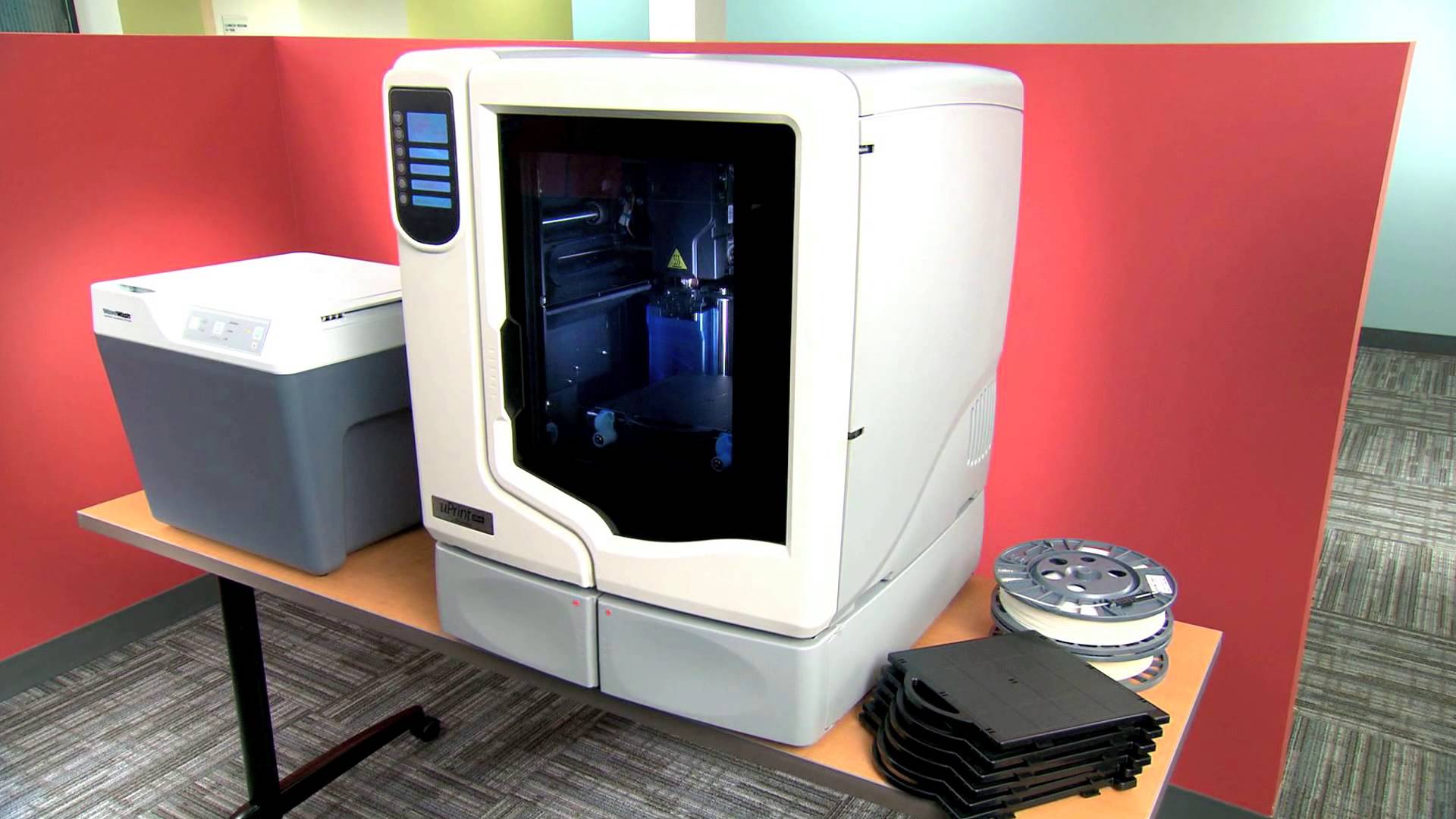
Imported 3D printers are machines researched, built and assembled in countries with a developed 3D printing industry. Some examples of imported 3D printers:
| IMPORTED 3D PRINTER | ORIGIN | KEY FEATURES | IMAGE |
| Cubicon 3D printer | Korea |
|
 |
| uPrint 3D printer | USA |
|
 |
| We will keep updating this list. |
Where locally assembled and DIY 3D printers still fall short:
- Limited stability. The hardest part of 3D printing is usually handling large parts, so the machine needs to be very stable to keep the risk to the part as low as possible. Imported 3D printers rate far higher than other machines on this point.
- Parts from DIY 3D printers are not very accurate, and the machines are not certified by any trusted organization.
Contact CT3D Group
CT3D Group – professional 3D printing, 3D scanning, design and rapid prototyping services nationwide.
- CT3D Thu Duc – Ho Chi Minh City, Hanoi, Hai Phong: in3d.edu.vn – Hotline 0975 008 728 (Mr. Thai)
- CT3D District 6 – Ho Chi Minh City: 3dmaker.vn – Hotline 038 7798308 (Mr. Phuc)
How to evaluate a 3D printer for your business
Whether a machine is imported or assembled locally, businesses should judge a 3D printer on specific criteria instead of origin alone. A machine fit for production should do well on these points:
- Stability on long prints: running for many hours without layer shifts or nozzle clogs is the most important requirement for large parts.
- Repeatability: printing the same part many times gives consistent dimensions.
- Build chamber and temperature control: an enclosed chamber helps ABS and engineering plastics print with less warping and less odor.
- Software and material ecosystem: stable slicing software with ready-made profiles for each material cuts down on trial and error.
- Technical support and spare parts: documentation, parts and people to help when the machine has a problem.
Imported vs. locally assembled printers at a glance
| Aspect | Branded imported printer | Locally assembled printer |
|---|---|---|
| Upfront cost | Higher | Lower |
| Build quality, stability | Usually consistent from unit to unit | Depends on the assembler |
| Customization | More limited | Easy to upgrade and repair |
| Best for | Businesses that need stable production | Learning, research, experiments |
There is no single right answer. Some businesses use both: a low-cost machine for quick in-house prototypes, and an industrial printing service for critical parts that need high accuracy.
Don’t forget running costs
Beyond the purchase price, factor in materials, wear parts such as nozzles and bed surfaces, electricity and, above all, operator time. A cheap printer that breaks down often can cost more in the long run. If you are not sure about your needs yet, try ordering through an industrial 3D printing service to judge quality and your real workload before buying a machine.
Frequently asked questions
Are imported 3D printers always better than locally assembled ones?
Not always. Branded imported printers are usually more stable and consistent, but a well-built assembled printer can still handle learning and simple prototypes. What matters is choosing a machine that fits how you will use it.
Which features should a business prioritize when choosing a 3D printer?
Prioritize stability on long prints, an enclosed chamber, auto bed leveling and technical support. These directly affect your print success rate and machine downtime.
What do 3D printer running costs include?
Print materials, wear parts such as nozzles and bed surfaces, electricity, regular maintenance and operator time. Count all of these when comparing buying a machine with using a service.
Do 3D printers need regular maintenance?
Yes. Cleaning the nozzle, checking belts, lubricating rods and leveling the bed regularly keep the machine running smoothly and extend its life. Maintenance should be more frequent when the machine runs nonstop.
Related services at CT3D Group
- Custom 3D printing service
- High-accuracy 3D scanning service
- Custom 3D design service
- CT3D Group network: ct3dgroup.com · in3d.edu.vn – Hotline/Zalo 0975 008 728

