
 Tiếng Việt



Many people look down on Chinese goods, but read this whole article. The cheap Chinese goods shipped to countries that want low prices are the ones with poor quality. Because “you get what you pay for”… anyone, anywhere on Earth, understands that saying.
CHINA LAYS THE FOUNDATION OF 3D PRINTING FOR ASIA AND AIMS TO LEAD THE WORLD.
AD| Chon Thanh land lots | Chon Thanh, Binh Phuoc land lots | affordable land lots
AD|Chon Thanh land lots |Dong Xoai land lots |Residential land lots |Rubber plantation land
AD | land for sale in the Chon Thanh administrative center, Binh Phuoc | suburban land lots
AD | Binh Phuoc land | Minh Hung, Chon Thanh land lots | Chon Thanh Becamex land
With its strong investment strategy for 3D printing, China aims to lead the Asian 3D printing market. Beyond that, this nation of over a billion people wants to overtake rivals like the US and European countries.
A Shanghai engineering company called Shanghai WinSun Decoration Design Engineering once built 10 houses of 200 m2 entirely with 3D printing. The company says the project used no concrete and cost only 4,800 USD (about 120 million VND), a very low figure compared with the cost of a solid reinforced concrete house.
This is not the first time a house has been built with 3D printing. Before this, a few houses in San Francisco (US) and in Russia had used the technology. But China is leading the way in Asia with this new building technique.
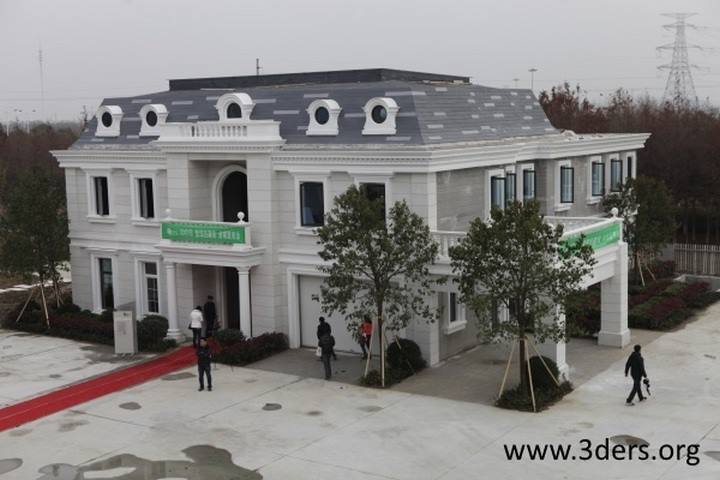
A house made entirely with 3D printing by Shanghai WinSun Decoration Design Engineering
BECONI.VN
- Facebook: https://www.facebook.com/beconi.vn
- Website: http://beconi.vn/
- Catholic statue workshop
- Catholic statues | Catholic statues and icons
- Premium Catholic statues
According to Forbes, China’s rapid growth is partly thanks to support from both the government and industry. The world’s most populous country even aims to dominate 3D printing in the near future.
According to IDC, China spent about 1.1 billion USD on 3D printing in 2017. With spending that large, China has become the clear leader in 3D printing growth in Asia.
Research firm MarketsandMarkets forecasts that 3D printing will become an industry worth at least 32.78 billion USD by 2023, with annual growth of 25.76%. The firm also believes that lower and lower production costs will make it easier to customize finished products. On top of that, government investment will push the 3D printing industry to grow even faster.
The Chinese government spends big on 3D printing to close the gap with the countries ahead of it:
>> 3D printing services
The Chinese government has long made clear its ambition to dominate many advanced industries, including electric vehicles, semiconductors and now 3D printing.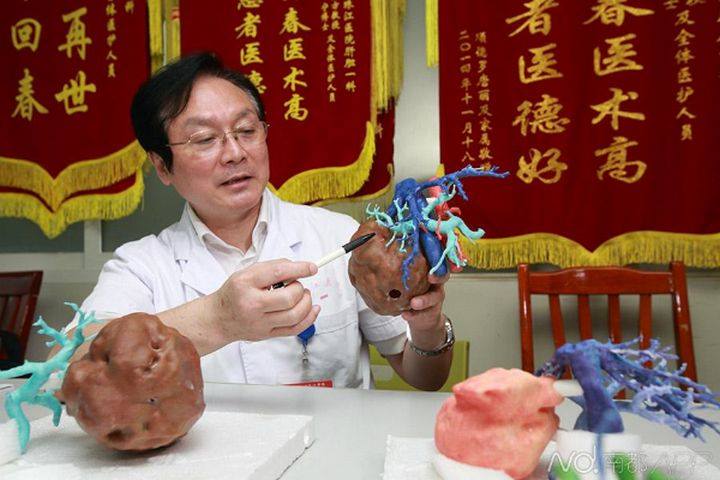
China now also uses 3D printing to make visual teaching models for medicine
Huge government investment gives China’s high-tech industry the chance to go higher and further. Officials began shifting in 2015, when the “Made in China 2025” initiative was launched. The initiative aims to drive the development of advanced technology, and 3D printing is one of its key priorities.
That is also why China’s Ministry of Industry and Information Technology introduced the National Plan for Promoting the 3D Printing Industry for 2015-2016. The plan includes training a skilled workforce and helping two or three or more domestic brands grow, to boost competitiveness and bring the 3D printing industry to a value of 3 billion USD by 2020.China still has many rivals to watch in Asia:
Strong economies in the region have also shown a lot of interest in 3D printing technology in recent years. In Taiwan, the government is working to spread knowledge of 3D printing through every product it can be used for, such as toys, machine parts, medical implants and even some foods. Up to 90 companies in Taiwan have formed an alliance to develop 3D printing together.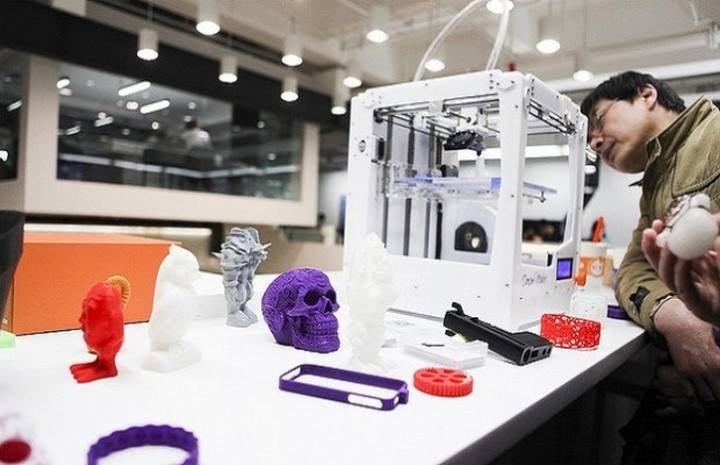
China started later, but it has big advantages in resources and financial strength
In South Korea, one of Asia’s high-tech hubs, the government invested about 37 million USD last year to promote 3D printing. Germany and the US are world pioneers in 3D printing but have fallen behind China and Australia. That’s right: besides East Asian countries, China also needs to watch Australia, which is very strong in 3D printing today. More and more companies in China are pursuing 3D printing technology The Chinese government is nurturing future talent and workforce by bringing 3D printing into the education system early. This is key to solving the shortage of highly skilled workers, because China currently lacks people with the knowledge and creativity to work with 3D printing.
A bus shelter made from 3D printing materials in China
If they master 3D printing and can design car parts, architectural models or even gelatin for cooking, students in China can easily earn an income and help the 3D printing industry grow. Quite a few companies are already developing 3D printing technology, such as UnionTech, Xi’an Bright Laser Technologies & Hunan Farsoon High Technology… In the near future, this number will grow and become much more diverse. Safety must come first if the 3D printing industry is to grow sustainably In the next five years, China will no longer need to worry about how to make 3D printed objects. The real question then will be how to regulate them. Just imagine how hesitant a home buyer would be about moving into a house made with 3D printing. China will certainly need proper standards and certifications if it wants to sustain and grow its 3D printing industry.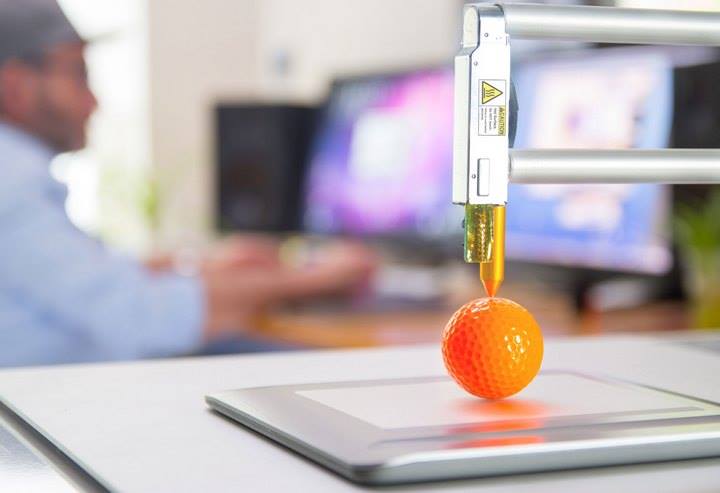 Christopher Hang-Kwang Lim, a senior technology expert, said: “Because of the rapid expansion and growth of 3D printing in China, one of the hardest challenges is safety, both for users of 3D printed products and for the industry.
If people just glance at the messy list of materials used in 3D printing, they will find it hard to picture how complex it is to set safety standards and to monitor and enforce them, assuming there is even one standard everyone accepts.”
In 2016 alone, the 3D printer market was worth more than 5 billion USD, with more than 200,000 3D printers sold.
The potential of 3D printing is huge. It applies not only to industry but can also support fields like science and medicine… Of course, it will take a long time for 3D printing to become as common as smartphones are today. It will also take countries with strong economies and resources, like China, leading the way in bringing 3D printing into every corner of life. Only then will the whole world soon get access to this technology of the future.Mai Huyen / Vnreview.
>>> 3D printing corneas | Lasting life thanks to 3D technology.
Contact CT3D Group
CT3D Group – Professional 3D printing, 3D scanning, design and rapid prototyping services nationwide.
- CT3D Thu Duc – Ho Chi Minh City, Hanoi, Hai Phong: in3d.edu.vn – Hotline 0975 008 728 (Mr. Thai)
- CT3D District 6 – Ho Chi Minh City: 3dmaker.vn – Hotline 038 7798308 (Mr. Phuc)
Frequently asked questions
How are 3D printed houses built?
3D printed houses are usually made with large extrusion machines that lay down a special cement mix or recycled material layer by layer from a digital drawing. Wall sections can be printed in a factory and assembled on site, or printed directly on site. Then the structure, electrical, plumbing and finishes are added like in a normal house.
Why are so many countries investing heavily in 3D printing?
Because 3D printing can quickly produce complex parts, personalize products and cut out tooling during the prototyping stage. It is seen as a spearhead of advanced manufacturing in aerospace, healthcare, automotive and construction.
What is the biggest challenge in growing the 3D printing industry?
A major challenge is setting quality and safety standards for 3D printed products, especially load-bearing parts, medical devices and buildings. There is also a need for people skilled in design, machine operation and material control.
What can Vietnamese businesses use 3D printing for right now?
Businesses can use 3D printing for product prototypes, jigs and fixtures, low-volume replacement parts, architectural models, statues and decor products. Combined with 3D scanning and silicone molds, 3D printing greatly shortens product development time.
Where should I start if I want to try 3D printing for a product?
Start with a specific part that has a 3D file or drawing, then choose the right printing technology, such as FDM, SLA or MJF, based on the surface finish and strength you need. Contact CT3D via Hotline/Zalo 0975 008 728 or contact@ct3dgroup.com for advice.
Related services at CT3D Group
- Custom 3D printing service
- High-precision 3D scanning service
- Custom 3D design service
- CT3D Group network: ct3dgroup.com · in3d.edu.vn – Hotline/Zalo 0975 008 728

