
 Tiếng Việt


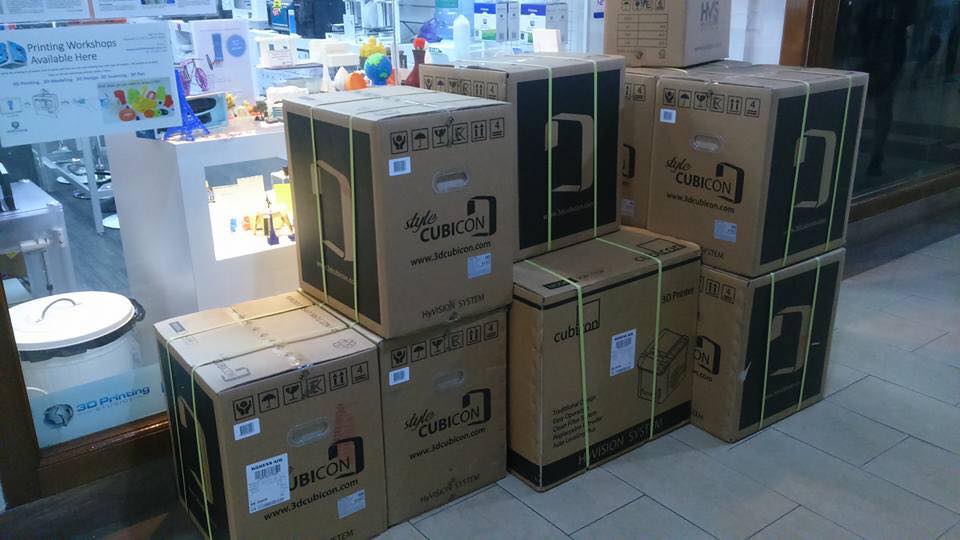
Cubicon 3D printers | Cubicon is a line of 3D printers researched, manufactured and assembled entirely in South Korea. They are highly rated as low-cost FDM 3D printers thanks to their stability and good print quality. Cubicon printers also have an attractive industrial design that stands out at first glance, and they have passed international testing for ease of use and safety.
Cubicon 3D printers || Safe 3D printers.
They feature a nano-technology filter that removes plastic odors and toxins, a 100% enclosed build chamber and minimal noise. All Hyvision 3D printers are safe for health and certified to international standards. Hyvision 3D printer lines:- Cubicon Style.
- Cubicon Single.
- Cubicon Lux.
- Cubicon Single Plus.
The flagship model: Cubicon Single Plus.

Industrial styling || Eco-friendly design.
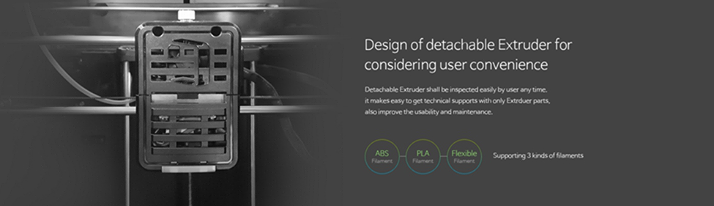
The smart print head on Hyvision 3D printers.

3D printing technology training.
The photo above shows a 3D printing training session using the Cubicon Single in South Korea. Not just in Korea, many countries choose Cubicon for their 3D printers for education because they are easy to use, quick to get running, very stable and, above all, completely safe.
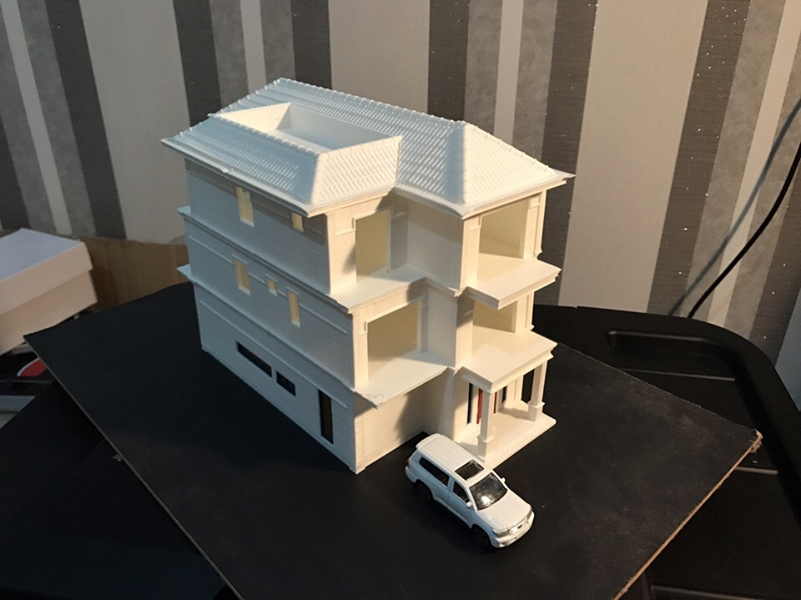
Low-cost 3D printers | Cubicon 3D printers.
Parts made on Hyvision 3D printers.
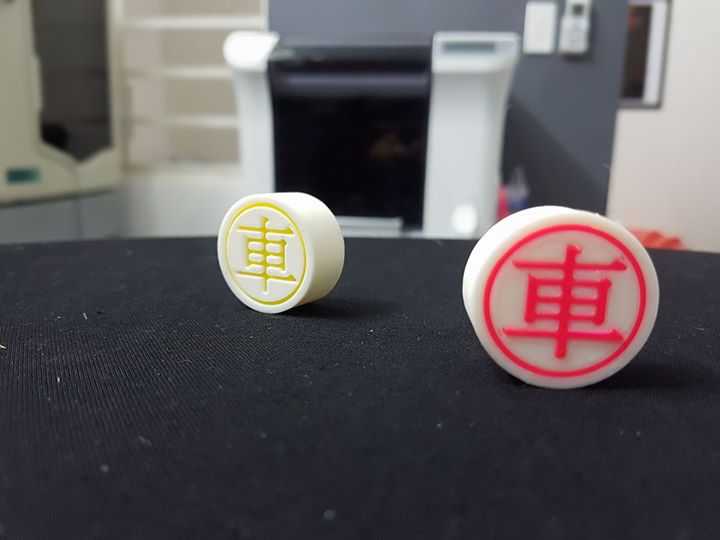
Parts printed on the Cubicon Single Plus 3D printer
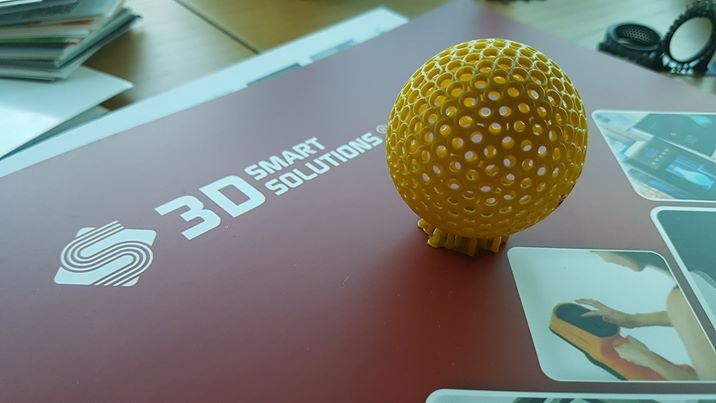
Parts made on the Cubicon Lux 3D printer (DLP)
For advice, please call us directly: 0975 008 728.
Contact CT3D Group
CT3D Group – professional 3D printing, 3D scanning, design and rapid prototyping services nationwide.
- CT3D Thu Duc – Ho Chi Minh City, Hanoi, Hai Phong: in3d.edu.vn – Hotline 0975 008 728 (Mr. Thai)
- CT3D District 6 – Ho Chi Minh City: 3dmaker.vn – Hotline 038 7798308 (Mr. Phuc)
Why is 3D printing being brought into the classroom?
3D printers are becoming common in schools because they let students turn ideas into real objects in just a few hours. Instead of learning geometry, mechanics or design only on paper, students can design, print, test and improve their own products. This is the hands-on, learn-by-doing approach that STEM education aims for.
Typical uses of 3D printing in education:
- Math and geometry: print polyhedra and curved surfaces to visualize spatial concepts.
- Physics and engineering: print gears, drive mechanisms and bridge models for load testing.
- Biology and medicine: print models of cells, organs and bones for teaching.
- History and art: print replicas of artifacts, statues and buildings.
- Robotics and creative projects: print frames, housings and custom parts for robots and startup products.
How to choose a 3D printer for schools
| Criteria | Why it matters |
|---|---|
| Enclosed build chamber | Limits contact with hot parts, reduces odor and keeps temperature stable |
| Air filtration | Reduces fine particles and plastic smell in the classroom |
| Ease of use | Auto bed leveling and simple software let teachers and students focus on design |
| Reliability | Prints for hours with few errors, less time spent on maintenance |
| Safe materials | Prefer low-odor PLA for classroom use |
Besides the printer, schools should prepare a basic 3D design curriculum, safety rules for operating the machine and a plan for consumables. For projects that need large parts, high accuracy or special materials beyond what the school printer can do, you can use a custom 3D printing service to finish competition entries or display models.
Frequently asked questions
At what age can students learn 3D printing?
Students in the upper grades of elementary school can start with simple 3D design under a teacher’s guidance. Running the machine should be supervised by an adult, especially around hot parts.
Is 3D printing in the classroom safe?
It’s generally safe if you use an enclosed printer with air filtration, low-odor materials like PLA and a well-ventilated room. Teach students not to touch the print head or bed while the printer is running.
Which 3D design software is good for beginners?
Beginners should start with online software that has a simple drag-and-drop interface. Once they’re comfortable, they can move to parametric CAD software to design more precise technical parts.
How long does a classroom 3D print take?
Small models usually take from 30 minutes to a few hours, depending on size, layer height and infill. Teachers should schedule large prints after class.
Related services at CT3D Group
- Custom 3D printing service
- 3D scanning service – high-accuracy 3D scanning
- Custom 3D design service
- CT3D Group network: ct3dgroup.com · in3d.edu.vn – Hotline/Zalo 0975 008 728

